Paul Chek & C.H.E.K Institute Review — The Truth Behind The Claims
paul-chek-review-chek-institute-reviews-truth
Meta title: Paul Chek & C.H.E.K Institute Review: Facts, Numbers & Legal Rights
Meta description: Independent review of Paul Chek and the C.H.E.K Institute by Master Level 5 practitioner Scott Bryant. Check claims vs reality, education changes, review patterns, and UK Consumer Rights Act 2015.
Introduction
I’m Scott Bryant — Master Level 5 C.H.E.K Practitioner qualified 2013, 27 years elite fitness, rehab and holistic coaching based in Battersea / Clapham / Wandsworth. This is my independent Paul Chek review and C.H.E.K Institute review — based on first‑hand experience, verified numbers, and UK law. If you’re researching training, costs, recognition, or refunds — here is what they do not tell you.
The Numbers That Don’t Add Up
• Claimed: “60 000 to 75 000 practitioners trained worldwide”
• Reality: Only ~76 reviews total on their own website; roughly 12–26 independent Google reviews across UK, US, Denmark, Sweden, Australia — mathematically impossible if genuinely well‑regarded.
• Review pattern: Most new positive reviews appear only around the 7th of each month since I started raising concerns — not organic feedback. Chek Academy originally had 11 reviews; now only mine remains visible.
• YouTube stagnation: 143 000+ subscribers but many videos linger at 30–2 500 views after months — far below reach expected for “world‑renowned” authority.
Education Dilution — From 5+ Years Mastery To 3 Years Fast‑Track
• Original pathway: Typically 5+ years of progressive, hands‑on study, in‑person palpation, supervised assessment and practical mastery to reach Level 5 Master Practitioner — costing £30 000–£40 000+ including travel, accommodation, equipment and lost income.
• New model: Compressed into 3 years online‑heavy delivery. Critical skills like breathing mechanics, palpation, fascial release and core diagnostics deliberately held back until Level 3 or Level 4 — creating a carrot‑on‑a‑stick revenue loop, not educational necessity.
• Title bait‑and‑switch: Level 1 for under £1 000 now often marketed as “Practitioner” — deliberately omitting “C.H.E.K” or “Level 1”, misleading people into equating it with years‑earned Master status.
• Faculty concerns: Many tutors are not formally qualified educators, offering zero structured support for dyslexia, ADHD or neurodiverse learners — despite high fees and long commitments.
Accreditation, Recognition & The License Trap
• Not regulated or accredited by UK active‑life bodies, universities, CIMSPA, GPhC, Chartered Society of Physiotherapy, osteopath boards or medical regulators.
• Mandatory annual license fees estimated £4–5 MILLION+ yearly revenue — yet no employer, gym or healthcare provider in the UK asks for this license.
• Refund terms conflict with law: Website states “14‑day limit only; no refunds for opened/digital products” — unenforceable under the Consumer Rights Act 2015. You have UP TO 6 YEARS in England/Wales/NI — 5 YEARS in Scotland to claim refunds for mis‑sold services, unmet promises or sub‑standard delivery.
Two weeks ago — 15 July 2026 — they quietly rewrote their core agreements for Chek Academy, Chek Europe Limited and Chek Australia PTY Limited. If you’ve applied, booked or signed anything since — you need to read this now.
They’re acting like they’re HMRC or government — making up “fines”, impossible deadlines, and penalties that go completely against UK law. This is exactly the same trick gym chains try — and it never stands up when you know your rights.
WHAT THEY SNUCK IN — ONE BY ONE
• 30‑day rule: Complete all online courses, exams and prerequisites within 30 days of being issued — regardless of work, family, illness or learning pace.
• Strict attendance: 75 % minimum attendance over 18 months; arrive 8:30 am sharp for live training — miss it and you pay.
• Pay full price if you leave early: If you don’t finish the full 18 months — charged the full regular price for every course, workshop or file you were given access to — EVEN IF YOU NEVER OPENED IT.
• Keep all deposits: Cancellation fee = entire deposit paid — no exceptions.
• Payment traps: Fees due 1st of month; fix failures only by 15th — miss it and account locked instantly.
• Split‑company shuffle: Shift liability between Chek Europe / Chek Australia — designed to confuse complaints and delay refunds.
THIS IS NOT “STANDARD” — MOST OF IT IS UNLAWFUL
Just like when Virgin Active tried telling me I was “locked in forever” — contracts cannot override UK law.
Under the Consumer Rights Act 2015: England / Wales / Northern Ireland: UP TO 6 YEARS to claim refunds Scotland: UP TO 5 YEARS Statutory rights CANNOT be signed away — no fine print changes that “Penalties” are void unless they only cover actual proven loss — charging full price for unused material is pure extortion Arbitrary deadlines that put all risk on you = unfair terms — struck down by courts every time
When I told Virgin Active I’d take their unfair lock‑in public to my audience — they backed down instantly. That’s because the law is on your side — not theirs. They’re banking on you not knowing it.
WHY NOW?
These changes didn’t happen by accident. Since we started exposing the dilution of training, fake numbers, hidden reviews and 13 years of sabotage — enrolments are dropping. Instead of fixing the problems — they’re tightening the noose to squeeze cash before people walk away.
WHAT YOU CAN DO RIGHT NOW
1. Save everything: Screenshots, emails, old terms vs new terms — date‑stamped proof wins every time.
2. Quote the law clearly: “Your clauses conflict with the Consumer Rights Act 2015 — I have statutory rights that cannot be waived.”
3. Escalate properly: Formal complaint → Trading Standards → factual reviews → public transparency if needed.
4. Don’t be bullied: If they threaten “fines” — reply: “You are not a statutory authority — you cannot issue penalties outside court.”
Conclusion
If they were confident in their education and value — they wouldn’t need to invent fines, slash deadlines and rewrite rules like this. This is panic. This is damage control. And you don’t have to put up with it.
About me: Scott Bryant — Active Bryant Fitness Systems — Battersea / Clapham / Wandsworth
13 Years Of Erasure — Why Am I Speaking Up?
• I completed the full curriculum, qualified Level 5 Master Practitioner in 2013 — then deliberately removed from directories and blocked for 13 years. Why? I upheld fair terms: refused refund after client delayed response SEVEN WEEKS past agreed deadline — not because I was wrong, but because it challenged their narrative.
• Meanwhile reports emerge of delayed equipment (3+ months vs typical 1–2 weeks from USA), unpaid or underpaid staff, shifting business entities — Phil Ward, Gavin Jenkins and others linked to multiple HMRC filings and irregular employment practices.
Your Action Plan If You Are Enrolled Or Considering
1. Save all evidence: course descriptions, emails, payment receipts, advertised outcomes — vital for any claim.
2. Quote UK law: Consumer Rights Act 2015 — unsatisfactory services = refund/replacement right up to 6 years.
3. Escalate: first formal complaint → Trading Standards → factual independent reviews → relevant industry bodies.
4. Check recognition locally: ask gyms, insurers and clinicians — do they actually require or value this qualification?
Conclusion
Paul Chek developed many useful holistic frameworks — but the Institute has drifted from education toward perpetual revenue generation: diluted pathways, misleading titles, hidden terms, unsubstantiated scale claims and unregulated licensing. As someone who walked the full journey — you deserve transparency, not gatekeeping.
About me: Scott Bryant — 27 years elite coaching, Master Level 5 C.H.E.K Practitioner since 2013 — Active Bryant Fitness Systems — Battersea / Clapham / Wandsworth. Transparent pricing £200/hr, strict client screening, proven results for back pain, sports performance and sustainable wellness.
To understand the full reality behind this organisation before making a financial commitment, read our complete unfiltered analysis across the network:
The Qualifications: Read our comprehensive CHEK Qualifications Review and Unfiltered Truth to see how these certifications hold up in the commercial fitness industry.
The Industry Reality: Learn why unaccredited courses can stall your career in The Hidden Cost of Uncertified Fitness Qualifications: Paul Chek Qualifications
Paul Chek Live C.H.E.K Institute — Review Manipulation, Misleading Titles & Hidden Costs — The Facts
I am Scott Bryant — Level 5 C.H.E.K Practitioner, Master Personal Trainer, 27+ years professional experience serving Battersea, Clapham, Wandsworth, Chelsea and Greater London. Over 13 years I invested more than £30 000 and completed six years of intensive study to reach Level 5, believing I was joining a transparent, high‑standard professional organisation. Today I am sharing facts anyone can verify themselvesC.H.E.K Institute
The Institute claims to have trained 60 000 to 75 000 people over 14 years, yet lists only around 704 reviews on their own website — less than 1 % of that claimed total. Far more concerning: multiple batches of reviews are posted repeatedly on the 7th day of every month — and this pattern started only two months ago, exactly when I began raising these concerns publicly. Many entries are short, identical in tone, use rehearsed marketing phrases, and appeared only after my honest feedback was suppressed for over a month before suddenly being made visible.
There is also widespread misleading use of titles: participants who have only completed Level 1 introductory courses are regularly referred to — and allowed to describe themselves — as “Practitioners”. This devalues the thousands of hours, years of dedication and huge personal investment required to achieve genuine senior qualifications like Level 5 properly. In addition, course renewals, administrative fees and extra charges are often introduced or increased without clear advance notice — while the Institute holds no formal UK government‑recognised accreditation.
Genuine independent feedback appears rare, timed suspiciously, and heavily curated. This is not how an open, accountable professional body should operate. Anyone researching training or certification deserves full transparency, not coordinated postings, inflated figures or misrepresented credentials.
To understand the full reality behind this organisation before making a financial commitment, read our complete unfiltered analysis across the network:
The Qualifications: Read our comprehensiveCHEK Qualifications Review and Unfiltered Truth to see how these certifications hold up in the commercial fitness industry.
The Industry Reality: Learn why unaccredited courses can stall your career in The Hidden Cost of Uncertified Fitness Qualifications: Paul Chek Qualifications
lying about costs, lying about exposure, lying about hours, lying about business growth, lying about who built what, exploiting staff for free labour, breaking consumer law, charging you 20 times the real price for basic tools — and then deliberately pushing you off the site while he puts himself front and centre.
This is the real #GavinJenning — not the version he wants you to seeKeywords: Gavin Jenning, Gavin Jenning C.H.E.K Institute, Gavin Jenning bankruptcy, Gavin Jenning lies, £50k excuse for conventions, estimated £32 million valuation, £29,000 declared assets, worked for free no pay, £14 christmas gift, asked to fix website for free, sabotaged hidden on Chek Connect, conflict of interest homepage, Level 5 Master Practitioner excluded, C.H.E.K Institute overpriced equipment, C.H.E.K Institute illegal refunds, C.H.E.K Institute exploitation, C.H.E.K Institute scam, C.H.E.K Institute refund policy illegal, C.H.E.K Institute caliper £395, alternative caliper £20 same function, C.H.E.K Institute uncovered, Gavin Jenning C.H.E.K Europ
“Claims of ‘more sign‑ups’ don’t explain identical posting dates, impossible percentages, or why honest feedback was hidden until forced out. Coordinated, timed, rehearsed — this is damage‑control, not genuine opinion.”
Gavin Jennings • C.H.E.K Institute — The Lies, The Bankruptcy & The Rip‑Off
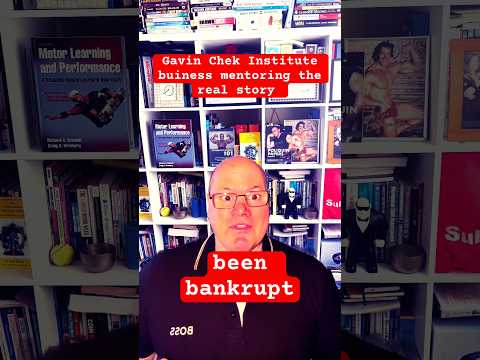
I first met Gavin Jennings in Lancashire back in 2012, when he took over running the C.H.E.K Institute. Right from the start he told me straight — he’d been bankrupt before. Yet nowhere on his profile, nowhere on the website, nowhere in his PR does he ever mention it. He hides it completely.
“Official GDPR update — ICO has backed my claim; C.H.E.K Institute and Gavin Jenkins face potential penalties up to £17.5 million for withholding my records dating back to 2013.”
He claims he “built one of the busiest C.H.E.K practices in the world” — but that’s not true. Alex Mackenzie built and established the C.H.E.K system in the UK and Europe. Gavin just bought his way in and took over what others had already done.Official public record — anyone can verify via Companies House / The Gazette.
Key facts from these documents:
Gavin Jennings ispublicly presented as CEO of the C.H.E.K Institute and head of C.H.E.K Europe, operating from Lancashire, UK.
Chek Europe accounts & Gavin Jenkins finances —
official public records
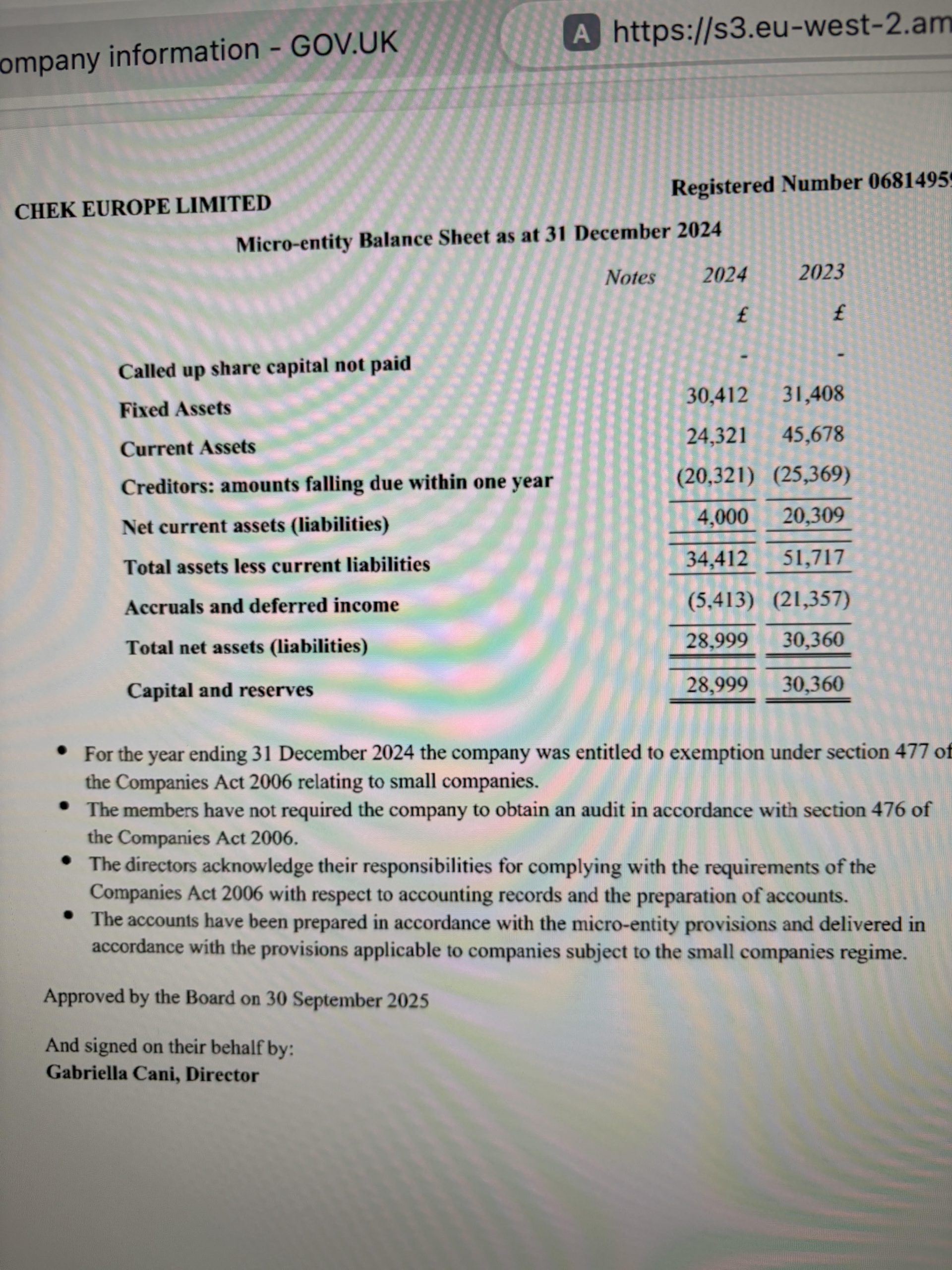
Claimed business valuation estimated at £32 million, yet filings show declared assets of only £29 000
gavin-jenningkins-chek-europe-accounts-assets-29000-companies-houseOfficial public record — verifiable via Companies House / The Gazette • Assets listed at just £29 000 against claimed £32 million valuation • Late/incomplete filings, no clear breakdown of course income • Previous bankruptcy history before taking over operations • “World’s busiest practice” claims don’t match these figures • Drastic staff cuts & supply shortages confirm financial strain He claims he works 200+ hours a week
— absolute nonsense. He never says “me and my team” — he takes all the credit himself. The truth is me, Phil, and many others were doing all the mentoring, all the teaching, all the hard work — FOR NOTHING. We weren’t even given free courses. All we ever got was a cheap little gift in the post at Christmas — probably worth about £40. That’s it.
I worked my arse off for 15 students — speaking to every single one at least once a week. They’d constantly change times, miss appointments, turn up whenever they felt like it — zero respect for my time, zero respect for the work I was doing, because it was all free.
And then? They deliberately moved all that work in‑house and cut me off completely. I’m a Level 5 Master Practitioner — the highest level there is — and they shut me out like I was nothing. I should’ve been the one doing that work, not some random person they picked. It was done on purpose.
When I met him I asked him straight:
“Why don’t you advertise the practitioners anymore? Why don’t you go to fitness conventions?” And his answer? “It costs too much money — £50,000.” What a joke — when the business is estimated by some sources to be worth £32 million, suddenly £50k is too much? That’s just an excuse.
Even after they hid me from the website, he still emailed me asking me to review and fix the website — FOR FREE. He told me “I’m not sabotaging your business.” If he wasn’t sabotaging me — why am I nowhere to be found on Chek Connect, while Phil, the Pilates instructor, and Gavin himself are all right there on the homepage? That’s a massive conflict of interest — putting himself and his mates up top, and burying the people who actually put the work in.
When I went up to Lancashire he asked me to teach classes on zone exercises — I never got paid a penny. I spoke to staff in America too — they told me exactly the same thing: “We don’t get paid, we just get free courses.”
While the business is estimated by some sources to be worth £32 million, Companies House records show he only declared £29,000 in assets. He never mentioned any valuation or figure like that to me at all.
He claims he’s consulted for Google and LinkedIn, worked
with the British Army, he may of done built a full practice in under six months. Even Peter Jones from Dragons’ Den says categorically — building any proper business takes at least six years. Six months is impossible — pure ego and lies. If he really consulted for Google and LinkedIn… why am I dominating his name above him everywhere? Why does he only have 830 followers on LinkedIn when I have over 3,000?
He calls himself Level 5 CHEK Master Practitioner
on the Chek Connect, page — but his own profile says Level 4. He can’t even get his own facts straight.
Now he’s flogging a new course called HBSS — costing you £2,000 extra on top of everything you’ve already paid. And look at their refund policy — it’s against the law:
• They say 14 days on courses — but “if you’ve downloaded anything or watched more than an hour, no refund.”
• All downloads, e‑books, webinars — “all sales final, no refunds ever.”
• That is illegal under UK consumer law — you have rights, and they’re breaking them.
They don’t even promote practitioners on their own website — only the faculty. So you pay thousands to train, and they won’t even help you get a single client.
And look at the equipment scam:
• Forward head caliper: £395 — you can buy a different, fully functional version that does exactly the same job for £20 anywhere else. It’s not identical, but it works exactly the same way for a fraction of the price.
• C.H.E.K flip coins: £19.95 — you can use any 50p coin.
• Full tool bundle: £760 — for stuff you can get for less than £300 elsewhere.
• C.H.E.K stick: £40 — most masters don’t even use one, they just use their hands.
• Half their stock is out of stock for 4–6 months, and they ask you for a deposit just to reserve it.
This isn’t “premium quality” — it’s price‑gouging, plain and simple.
To understand the full reality behind this organisation before making a financial commitment, read our complete unfiltered analysis across the network:
The Qualifications: Read our comprehensiveCHEK Qualifications Review and Unfiltered Truth to see how these certifications hold up in the commercial fitness industry.
The Industry Reality: Learn why unaccredited courses can stall your career in The Hidden Cost of Uncertified Fitness Qualifications: Paul Chek Qualifications
lying about costs, lying about exposure, lying about hours, lying about business growth, lying about who built what, exploiting staff for free labour, breaking consumer law, charging you 20 times the real price for basic tools — and then deliberately pushing you off the site while he puts himself front and centre.
This is the real Gavin Jenning — not the version he wants you to seeKeywords: Gavin Jenning, Gavin Jenning C.H.E.K Institute, Gavin Jenning bankruptcy, Gavin Jenning lies, £50k excuse for conventions, estimated £32 million valuation, £29,000 declared assets, worked for free no pay, £14 christmas gift, asked to fix website for free, sabotaged hidden on Chek Connect, conflict of interest homepage, Level 5 Master Practitioner excluded, C.H.E.K Institute overpriced equipment, C.H.E.K Institute illegal refunds, C.H.E.K Institute exploitation, C.H.E.K Institute scam, C.H.E.K Institute refund policy illegal, C.H.E.K Institute caliper £395, alternative caliper £20 same function, C.H.E.K Institute uncovered, Gavin Jenning C.H.E.K Europ
Matt Wallden • Primal Lifestyle — The Threat, The Lies & The Facade Of Loyalty
This is the full truth about Matt Wallden of Primal Lifestyle / MattWallden.com, someone I barely knew — someone I’d even bought equipment from, who turned on me, threatened me, and joined the rest to erase me the moment I spoke the truth.
I first saw Matt Wallden at a seminar, then later met him up in Lancashire. We never sat down or had a proper conversation — it was just a quick hug, a quick “Hello mate, how are you?” and “Hello Scott” — that was all. Then I sat down, and straight away I heard Paul Chek spouting absolute bollocks saying you might see him in a nightclub taking ecstasy. I couldn’t believe what I was hearing.
Matt Wallden / Primal Lifestyle Limited Company: Primal Lifestyle Limited — No. 06288089 | Director: Matthew James Wallden
Key dates: Liquidation began 13 April 2017; Final Gazette notice GAZ2 — dissolved officially 12 April 2021 — exactly five years ago Accounts last filed up to Nov 2015
The Gazette final notice 12 April 2021Matt Wallden — Primal Lifestyle Limited Gazette notice — dissolved 12 April 2021 Creditors’ voluntary liquidation opened 2017; final strike‑off published 12 April 2021 — five years confirmed dissolved. Yet he still presents this as a successful business history, never disclosing the insolvency record.
I could feel straight away something wasn’t right with Matt’s energy — distant, like he was already keeping me at arm’s length. I later found out his father had passed away, so maybe he was grieving — but when my own dad was diagnosed with dementia, I stayed away from events because I was so stressed and very fragile — I knew I couldn’t handle being around everyone and keep my cool.
I also remember him selling Vibram products back then — a company that later went bust. I bought the eyebrows and the neutraliser directly from him. Public records show he runs Primal Lifestyle Health & Performance as a sole trader — no active limited company showing for this work.
I know he completed his HLC and Level 3 training around 2005 or even earlier — so he’s been around a long time. Yet he’s posted videos saying how embarrassed he is that he’s got diabetes — and it makes you ask: why are you telling your clients they have to walk everywhere, pushing them hard, bullying them into it… when you can’t even do it yourself? It’s pure hypocrisy — one rule for them, another for everyone else.
Everything changed when they wiped me completely from the official C.H.E.K website listings — once, that was it. They never wrote to me, never called me, never gave me any explanation at all. I made all those videos out of pure anger because what they did was totally out of order — taking me off for no reason at all, and not even having the decency to pick up the phone and tell me why. That’s typical of how they operate.
That’s when Matt called me.
At first he sounded concerned — but now I believe it was a trap, just fishing to see where I stood. I told him plainly: “You’ve taken me off the site for no reason — it’s completely wrong.”
That’s when the mask fell off. When I told him I was going to go public with everything Paul Chek and the Institute were really doing — he threatened me straight in no uncertain terms: “We will sue you.”
I told him: “Go ahead then — sue the truth.”
He switched tone fast. Suddenly he was saying: “Okay, what do you want?” I told him exactly what any fair person would ask for: “I just want to be recognised for what I’ve achieved. I’m a Level 5 Master Practitioner, I’ve worked my arse off — why can’t I contribute more to the Institute and get the support I’ve earned?”
He promised me everything I wanted: “I’ll arrange a meeting with Gavin Jenkins. We’ll give you all the new updated course materials for free. We’ll sort this out properly.”
They gave me access to the courses — but then I ended up doing work for the website, speaking to people in America, all completely for free, no pay at all. That is totally against the law. And I later found out I wasn’t the only one — other practitioners and trainers were doing proper work over in America, and all they got back was free courses instead of the wages they were owed.
But then I asked him the hard questions — about Paul Chek, about the student who died on his watch, about Paul’s drug use and how it damages the reputation of every single one of us.
That was it — that was all he had. As if being “Paul Chek” excused anything. As if endangering people, lying, behaving recklessly was somehow just part of the act. I told him plainly: “There is no excuse. It looks bad for all of us — and it’s wrong.”
He set up that meeting with Gavin — and that’s exactly where the gaslighting started, the lies, the games, the empty promises.
The worst part? Matt wasn’t just complicit — he joined in. He’d stand there treating Paul like some untouchable guru to your face — then turn around and mock his handwriting, call him names, and slag him off in private videos. They’re all the same — backstabbers, hypocrites, saying one thing to your face and another the second you turn your back.
Matt never hit me, never physically attacked me — but threats, lies, exploitation and betrayal hurt just as deep. Especially when you’ve paid him and treated him fairly. He had every chance to do the right thing — and he chose to side with the lies instead.
To understand the full reality behind this organisation before making a financial commitment, read our complete unfiltered analysis across the network:
The Qualifications: Read our comprehensive CHEK Qualifications Review and Unfiltered Truth to see how these certifications hold up in the commercial fitness industry.
The Industry Reality: Learn why unaccredited courses can stall your career in The Hidden Cost of Uncertified Fitness Qualifications: Paul Chek Qualifications
All of this is 100% factual and witnessed. Truth is my only defence.Keywords: Matt Wallden, Primal Lifestyle, Primal Lifestyle Health & Performance, MattWallden.com, Matt Wallden sole trader, bought eyebrows neutraliser Matt Wallden, Matt Wallden Level 3 2005, Matt Wallden diabetes embarrassed video, Matt Wallden hypocrite walking advice, Matt Wallden C.H.E.K Practitioner, wiped from website once no reason, free work no pay illegal, practitioners exploited free courses, unpaid work for C.H.E.K Institute, US work unpaid, Matt Wallden threatened to sue, C.H.E.K Institute unfair removal, Gavin Jenkins gaslighting, fitness industry exploitation, C.H.E.K Institute exposed
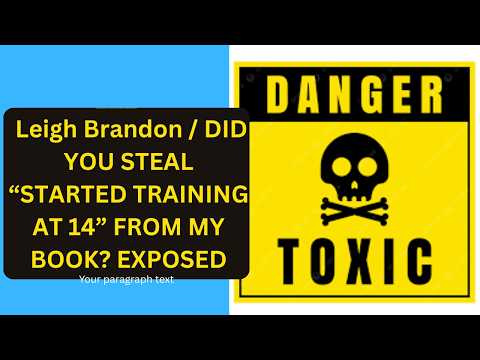
Leigh Brandon • BodyChek — The Truth About Conduct & Credentials
This is the full truth about Leigh Brandon of BodyChek — someone I barely knew, whose actions and credentials only came to light after I called them out publicly.
When I looked at the official C.H.E.K Institute listings, Leigh Brandon, Matt Wallden and Gavin Jenkins had no Level 5 status showing at all. I honestly thought that meant they hadn’t qualified for it yet — until I made a video pointing this out. Just three days after I exposed this publicly, their Level 5 status suddenly appeared on their official profiles on the C.H.E.K website.Exact blog layout
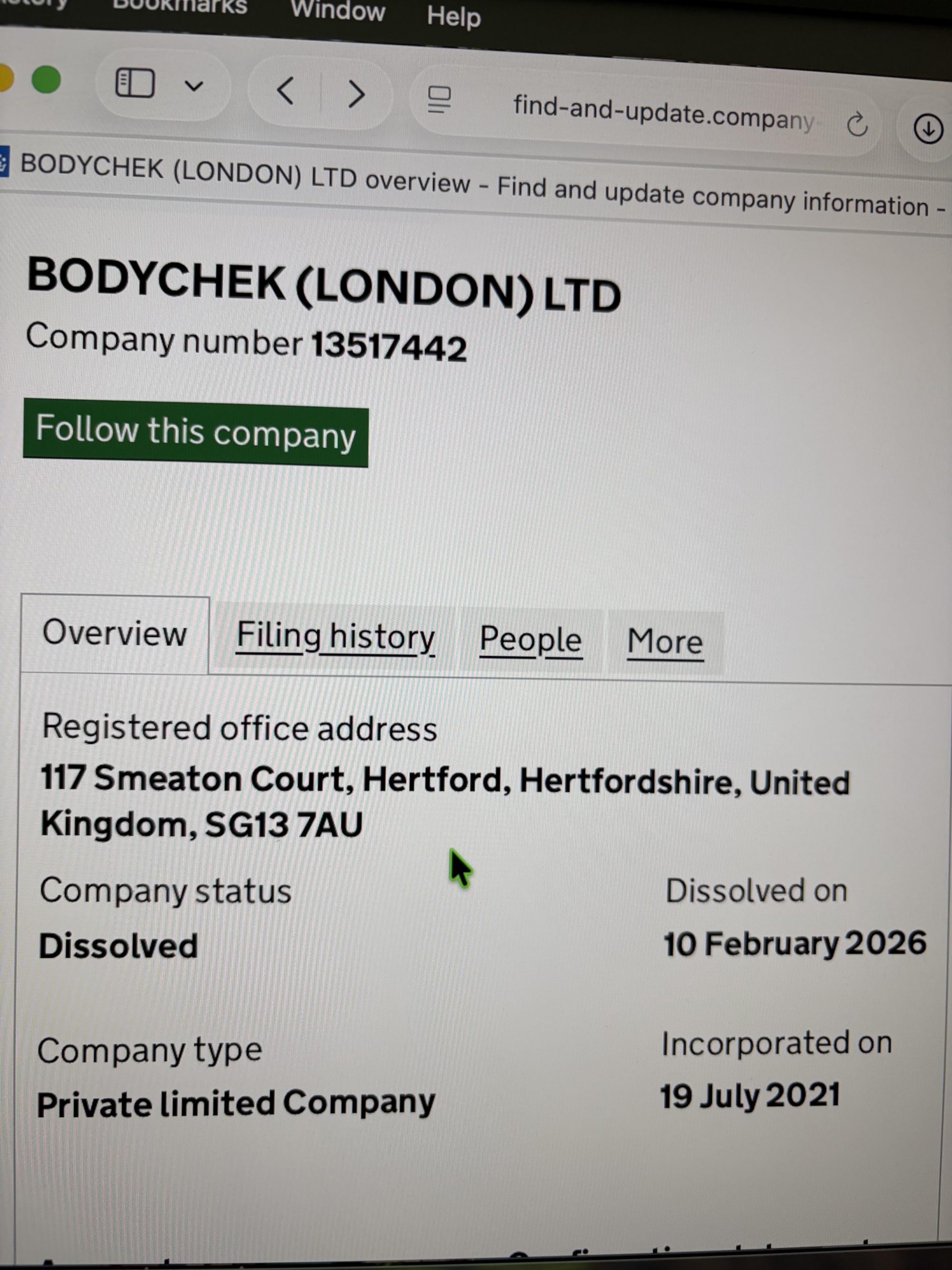
Leigh Brandon — Body Chek strike‑off notice — 2 February 2026
Official Gazette notice issued 2 February 2026 to strike Body Chek from the register. No active trading company listed; Leigh Brandon still presents himself as an established C.H.E.K practitioner with a fully operating business — public records prove otherwise.
Official public record — verify via Companies House / The Gazette
Official public record — verify via Companies House / The Gazette
• Notice date: 2 February 2026 — formal strike‑off action started
• Status: First Gazette notice — dissolution imminent unless proof of active trading submitted
• Why this matters: Operates as a specialist, high‑value practitioner while his trading vehicle is being removed for non‑compliance — accounts overdue, no renewal, no evidence of proper running
• Reality: His limited business has effectively ceased; he has failed to keep up basic legal requirements — and has neverdisclosed this to students or clients.
• Confirmed dissolution: Bodychek (London) Ltd — dissolved 10 February 2026 via compulsory strike‑of Official public record — verify anytime via Companies House / The Gazette
• Confirmed dissolution: Bodychek (London) Ltd — dissolved 10 February 2026 via compulsory strike‑off
• Historic debts: Earlier BodyChek filings show liabilities £23 223 (Oct 31 2005) and £5 505 (Mar 31 2005) — all previous entities already struck‑off
• What this means: He continued operating without keeping legal filings up‑to‑date; dissolution is permanent — he never disclosed this total failure to clients or students.
I also checked Companies House myself and found official Gazette notices and past dissolution records against businesses linked to him. You have to ask: how can you claim to be a successful, established C.H.E.K Practitioner when there are official public records showing dissolved companies and strike‑off notices against your name? The official records tell a very different story to the one he presents.
I met Leigh Brandon exactly once, up in Lancashire. I asked him politely how his DJ work was going — he told me he only did private events, never public gigs. That was the only real conversation we ever had.
First thing that happened: He walked up to me in the gym reception, tapped me on the top of my head and said “Hello Scott”. Not a handshake, not a proper greeting — something I immediately didn’t respect. I knew right then I didn’t like how he carried himself.
After that, he kept looking over at me, trying to get my attention — but I ignored him. I already knew something wasn’t right about how he acted. I was already Level 5 at that point; he was still only Level 4. If he’d acted properly, greeted me like a man, and asked decently — I would’ve gone out of my way to help him with his website, no questions asked. But he never did things the right way.
Later, when I was training my client: He walked over, reached for the Swiss ball — and deliberately dropped it straight down onto my client’s head. I saw exactly what he was doing and stepped in to stop it getting worse.
He joined Gavin Jenkins, Phil Loizides and Matt Wallden to erase me from listings, silence me, and ruin my business — all because I spoke the truth about what really goes on inside the Institute. I believe the whole campaign against me started because of a man called Carroll.
He presents himself as an expert and authority — but you cannot trust someone who acts like that around clients, refuses to greet people properly, hides past company issues, and only updates their official qualifications the moment they get caught out publicly.
I never asked for any of this. I never picked a fight. But when you act like that and try to bury the truth — the truth always comes out.
All of this is 100% factual and witnessed. Truth is my only defence
To understand the full reality behind this organisation before making a financial commitment, read our complete unfiltered analysis across the network:
The Qualifications: Read our comprehensiveCHEK Qualifications Reviewand Unfiltered Truth to see how these certifications hold up in the commercial fitness industry.
The Industry Reality: Learn why unaccredited courses can stall your career in The Hidden Cost of Uncertified Fitness Qualifications: Paul Chek Qualifications
Phil Loizides Lion Health and Fitness North London — The Truth About The Backstabber
This is the full story of Phil Loizides, owner of Lion Health and Fitness, North London — someone I trusted as a close friend, only to be betrayed, lied about, and targeted for destruction the moment I dared speak the truth about the C.H.E.K Institute.
It all started back in 2013, straight after we finished our Level 4 qualification together. We both decided to push on and do Level 5 to become Master Practitioners. I became the very first Level 5 Master Practitioner in the UK, and I was also the first to get my own book published.
But then everything changed. I had a mentoring client who wanted to do the HLC program with me. I told him to go ahead and complete his paperwork — but he left it seven whole weeks before doing anything, then suddenly demanded a refund, and threatened “I will kill your career” if he didn’t get his way. That was the moment the campaign against me began.
Phil — Lion Health and Fitness: claims vs missing records
Multiple limited companies linked to Phil trading as Lion Health and Fitness have been officially dissolved or struck‑off the register. No active matching limited company can be found today — despite presenting himself as an established practitioner based in North London.
Verified via Companies House dissolved archive & The Gazette
• No active limited company registered under Lion Health and Fitness or linked variations
• All previously listed linked entities are dissolved or removed — pattern of repeated new companies then vanishing
• Never disclosed this history to clients or students
I still supported Phil right through all of this: I helped him build his website, taught him diaphragm release techniques, took professional, high‑quality photos for him — shots that would be used worldwide — and we’d go out for dinner and drinks, taking it in turns to pay, fair and square between mates. During Covid, when everyone was isolated, he had family he could turn to — I had no one. He was the only person I had to talk to regularly. He drove me around his local area, showed me where he lived, and told me constantly how much he hated the C.H.E.K faculty, how they all just licked Paul Chek and Gavin Jennings’ backsides, and how they never helped him or answered his calls.
But the moment I called him out for being a hypocrite — for doing exactly what he complained about — he turned on me instantly.
He shared my private personal information behind my back, conspired with Gavin Jenkins, Leigh Brandon and Matt Wallden to erase me from C.H.E.K Connect, hid my Level 5 Master Practitioner status, and worked to sabotage my business so I would get thousands of views but no clients. He threatened me alongside Matt Wallden, telling me to keep quiet or face legal action — all because I spoke the truth.
Public records and real reviews tell the real story:
• We’ve both been in business around 27 years — yet Phil Loizides only has 2 Google reviews for Lion Health and Fitness. I have over 127 testimonials on my own website and over 38 Google business reviews — that’s what happens when you treat people right.
• He has run five different dissolved/struck‑off companies
• He has been struck off by HMRC
• He has no working official website
• He hides behind fake names and closed accounts to avoid scrutiny
Compare that to Warren Williams — a fellow practitioner with just £900 in his business account, but who runs his business honestly, transparently, and never stabs people in the back. That’s the difference between integrity and someone who will betray anyone just to fit in.
Leigh Brandon assaulted me in the gym; Matt Wallden threatened me over the phone; Gavin Jenkins lied about working 200+ hours a week — something mathematically impossible, as there are only 168 hours in any week — and Phil Loizides went along with all of it.
If you claim to be a friend, you can take honest feedback.
You don’t destroy someone’s livelihood when they already had nobody else to turn to. Truth is my only defence — and all of this is 100% verifiable fact.North London — The Truth About The Backstabber
This is the full story of Phil Loizides, owner of Lion Health and Fitness, North London — someone I trusted as a close friend, only to be betrayed, lied about, and targeted for destruction the moment I dared speak the truth about the C.H.E.K Institute.
It all started back in 2013, straight after we finished our Level 4 qualification together. We both decided to push on and do Level 5 to become Master Practitioners. I became the very first Level 5 Master Practitioner in the UK, and I was also the first to get my own book published.
But then everything changed. I had a mentoring client who wanted to do the HLC program with me. I told him to go ahead and complete his paperwork — but he left it seven whole weeks before doing anything, then suddenly demanded a refund, and threatened “I will kill your career” if he didn’t get his way. That was the moment the campaign against me began.
I still supported Phil right through all of this: I helped him build his website, taught him diaphragm release techniques, took professional, high‑quality photos for him — shots that would be used worldwide — and we’d go out for dinner and drinks, taking it in turns to pay, fair and square between mates. During Covid, when everyone was isolated, he had family he could turn to — I had no one. He was the only person I had to talk to regularly. He drove me around his local area, showed me where he lived, and told me constantly how much he hated the C.H.E.K faculty, how they all just licked Paul Chek and Gavin Jenkins’ backsides, and how they never helped him or answered his calls.
But the moment I called him out for being a hypocrite — for doing exactly what he complained about — he turned on me instantly.
He shared my private personal information behind my back, conspired with Gavin Jenkins, Leigh Brandon and Matt Wallden to erase me from C.H.E.K Connect, hid my Level 5 Master Practitioner status, and worked to sabotage my business so I would get thousands of views but no clients. He threatened me alongside Matt Wallden, telling me to keep quiet or face legal action — all because I spoke the truth.
Public records and real reviews tell the real story:
• We’ve both been in business around 27 years — yet Phil Loizides only has 2 Google reviews for Lion Health and Fitness. I have over 127 testimonials on my own website and over 38 Google business reviews — that’s what happens when you treat people right.
• He has run five different dissolved/struck‑off companies
• He has been struck off by HMRC
• He has no working official website
• He hides behind fake names and closed accounts to avoid scrutiny
Compare that to Warren Williams — a fellow practitioner with just £900 in his business account, but who runs his business honestly, transparently, and never stabs people in the back. That’s the difference between integrity and someone who will betray anyone just to fit in.
Leigh Brandon assaulted me in the gym; Matt Wallden threatened me over the phone; Gavin Jenkins lied about working 200+ hours a week — something mathematically impossible, as there are only 168 hours in any week — and Phil Loizides went along with all of it.
If you claim to be a friend, you can take honest feedback. You don’t destroy someone’s livelihood when they already had nobody else to turn to. Truth is my only defence — and all of this is 100% verifiable fact.
To understand the full reality behind this organisation before making a financial commitment, read our complete unfiltered analysis across the network:
The Qualifications: Read our comprehensive CHEK Qualifications Review and Unfiltered Truth to see how these certifications hold up in the commercial fitness industry.
The Industry Reality: Learn why unaccredited courses can stall your career in The Hidden Cost of Uncertified Fitness Qualifications: Paul Chek Qualifications



 The Numbers That Don’t Add Up
 Education Dilution — From 5+ Years Mastery To 3 Years Fast‑Track
 Accreditation, Recognition & The License Trap
 WHAT THEY SNUCK IN — ONE BY ONE
 England / Wales / Northern Ireland: UP TO 6 YEARS to claim refunds
 WHY NOW?
 13 Years Of Erasure — Why Am I Speaking Up?





 gavin-jenningkins-chek-europe-accounts-assets-29000-companies-houseOfficial public