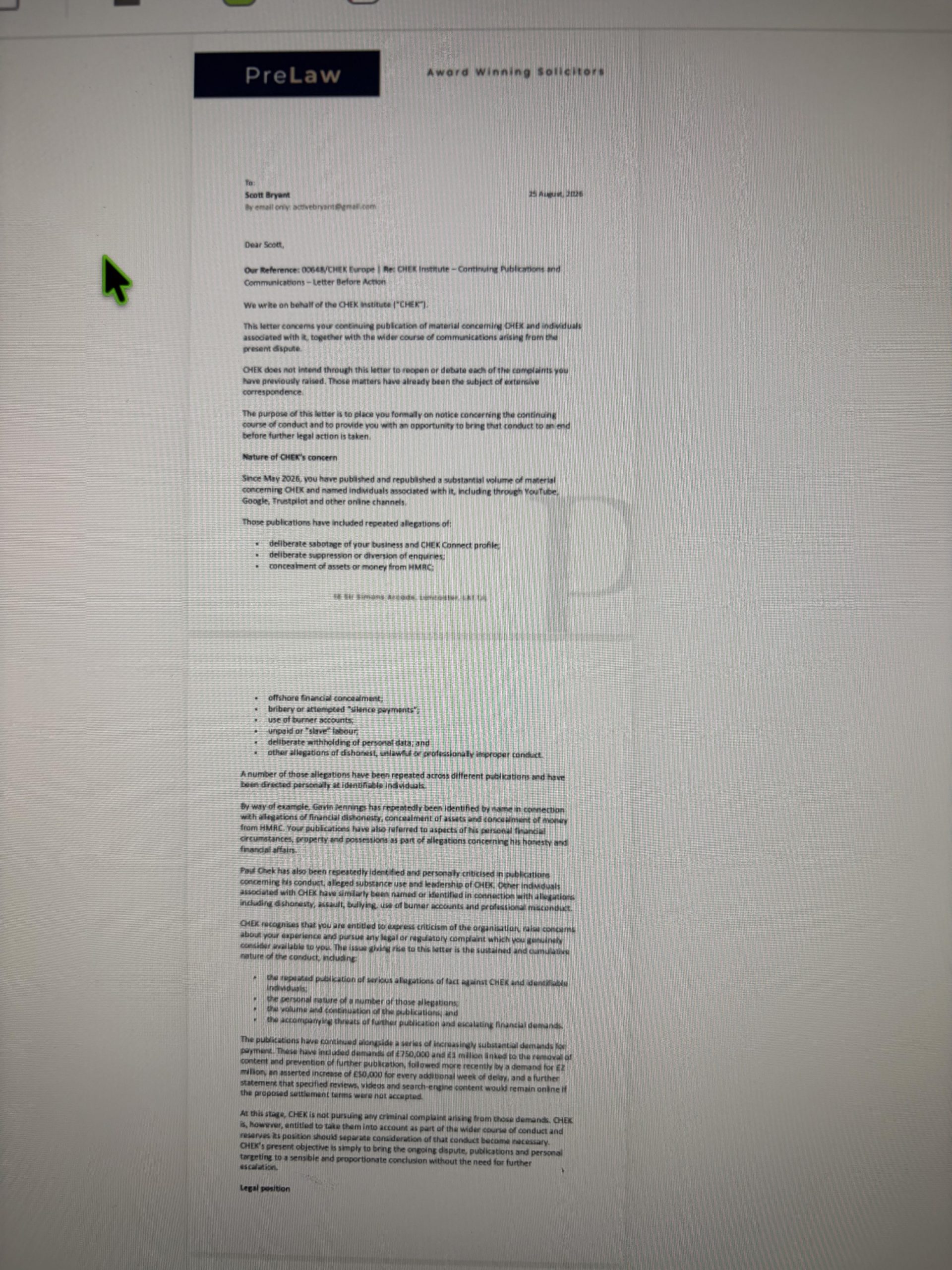
If you’ve been following this story, you’ll know we’re now at a critical point. The deadline for responding to a £3.5 million claim is fast approaching — and what’s happened in these final days has been nothing short of revealing.
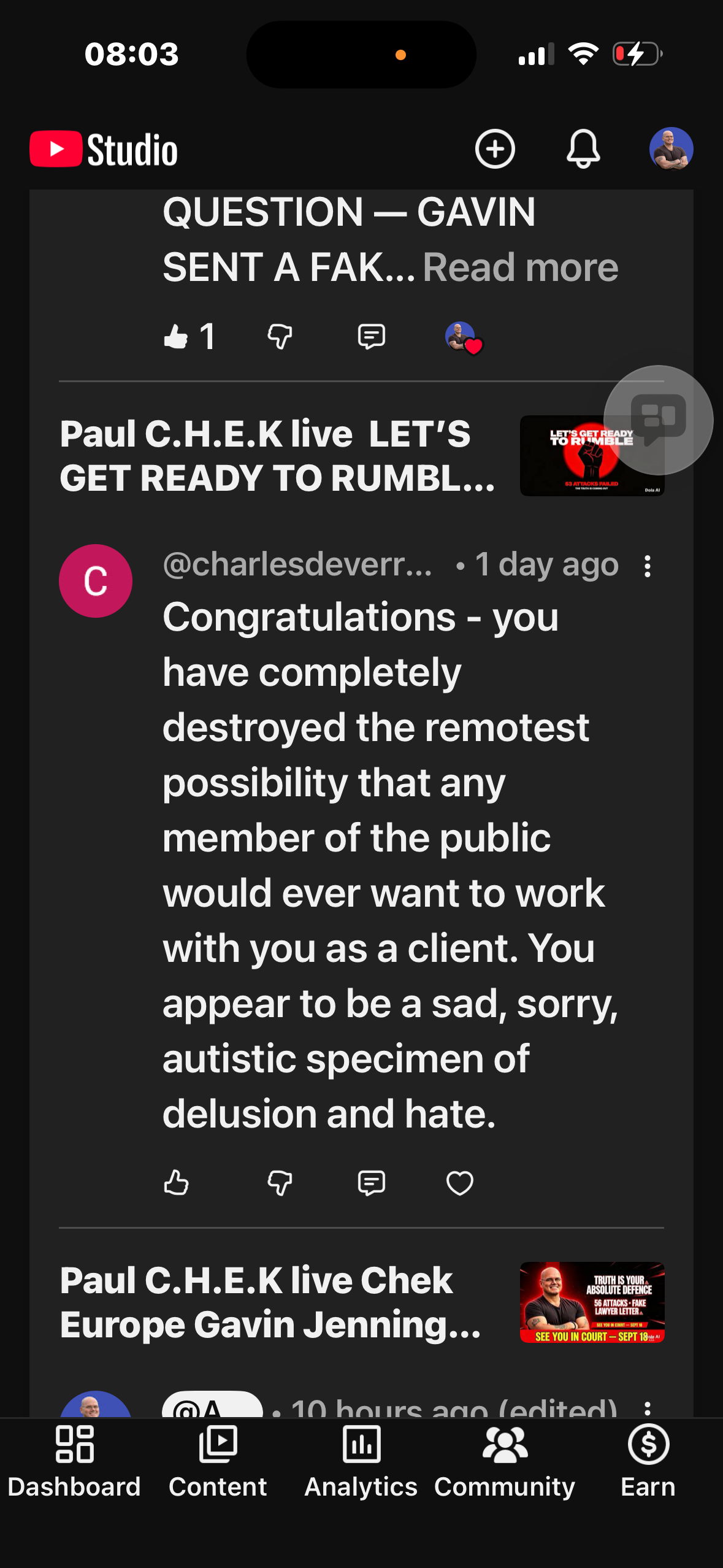
Instead of presenting evidence or building a defence, what we’ve seen instead is a last-minute request for more time, pressurising emails from an inexperienced solicitor, and over 144 documented attacks on my character and work.
Qualifications That Mean Nothing Anywhere
Let’s start with the basics. The CHEK Institute claims to be a world-leading holistic health organisation — yet ask yourself this: who regulates them?
• Their qualifications are not recognised by any government or independent accreditation body anywhere in the world
• You pay £250 for a course, then you pay again just for the privilege of holding a certificate
• There is no official grievance procedure on their website — nowhere to go if you have a legitimate concern
• There is no disability access policy — nothing for people like myself with dyslexia
If these qualifications were genuinely respected and accredited globally, everyone would understand the value. But they’re not. You’re paying for a logo that literally no one in the wider industry recognises. That’s not a qualification — that’s a membership fee.
“He’s Mentally Ill” — Where’s The Proof?
Perhaps the most serious allegation Gavin Jennings made was telling students in a training class that I was “mentally ill” and they shouldn’t work with me.
Where is the medical evidence? Where is the documentation? Because I have plenty of documentation of my own:
• 560+ blog posts ranking Page 1 on Google search results
• Over 4 million views across my YouTube channel
• Level 5 Master Practitioner since 2013 — achieved through their own coursework and exams
• 84 pages of evidence prepared and ready for the court
Does that sound like someone who is mentally unwell? It doesn’t to me either. That statement wasn’t a concern — it was defamation. And the person who heard it said it? They will be subpoenaed if necessary.
5 Months of Silence — Then Panic in The Final Days
This case has been ongoing for months. For five months — nothing. Then suddenly, with only days remaining before the deadline:
• A last-minute application for an extension of time is filed
• Emails arrive using money and costs as threats — “agree to extra time or you’ll be charged court fees”
• The solicitor has only been on the SRA register for around 1 year, and her SRA registration details were buried at the very bottom of her emails — not clearly displayed as required
• The fake lawyer’s letter sent in August came from a company that was officially dissolved on 4 August 2026 — meaning they had no legal authority to be sending correspondence on 25 August
If you had a valid defence against a £3.5 million claim — would you wait until 4 days before the deadline to say anything? Or would you have been on it from day one? That answer is obvious.
PAUL C.H.E.K EUROPE TWO BURNER ACCOUNT ATTACKS — THREATS, INSULTS, AND PANIC DELETED
144 Attacks — The Question Everyone Needs To Ask
This is the one that baffles me most: 144 separate documented attacks — burner accounts, messages, fake profiles, coordinated complaints.
Put yourself in their position: someone sues you for £3.5 million. What do you do? You keep your head down, you gather your evidence, you prepare your defence. You do NOT spend five months attacking the person suing you online.
Unless you have no defence. In which case, what you’re actually doing is trying to pressure the other person into backing down. That’s not legal strategy — that’s intimidation. And it hasn’t worked.
What Happens Next — Deadline: 4pm, Tuesday 20th October
The clock is ticking. By 4pm on Tuesday 20th October, one of two things happens:
1. They file their defence and extension request — and the judge decides whether they get the extra time they’ve asked for
2. They don’t file — and default judgment is entered
Either way, I’m fully prepared. I have my evidence organised, my responses ready, and my position clear. If they genuinely need more time for a medical or family emergency — with proof — I’d consider it. But threatening me with costs and pressurising me into agreeing? That’s not how negotiation works.
The Truth Doesn’t Have A Deadline
Here’s the reality that matters most to me: whatever happens in court, the truth doesn’t change.
• The qualifications are still unrecognised
• The company was still dissolved when they sent that letter
• The statements made about me were still made without evidence
• My content stays online — unless they get a specific court order for each individual page, costing them even more money
I’m taking a well-earned break. I’ve uploaded videos in advance, so my content will keep appearing while I’m away. I’ll still be here, I’ll still be speaking up — but I’m stepping back to breathe, rest, and remember that there’s more to life than this dispute.
You decide what you believe. Search the claims yourself. Check Companies House. Check the SRA register. Look at the dates. The evidence is all there — publicly available, just like I said it would be.
o understand the full reality behind this organisation before making a financial commitment, read our complete unfiltered analysis across the network:
The Qualifications: Read our comprehensive CHEK Qualifications Review and Unfiltered Truth to see how these certifications hold up in the commercial fitness industry.
The Industry Reality: Learn why unaccredited courses can stall your career in The Hidden Cost of Uncertified Fitness Qualifications: Paul Chek Qualifications
1/5 Stars — 15+ Years Customer. £80+ Trainers That Rip & Vanish When You Need Support
I’ve been wearing Vivo Barefoot for well over fifteen years. I’ve genuinely believed in what they stand for — natural foot shape, minimal footwear, and getting back to how our feet are meant to function. I’ve recommended them to friends, family, and clients. That’s exactly why writing this hurts more than a little.
Vivo Barefoot 1/5 Stars — 15+ Years Customer. £80+ Trainers That Rip & Vanish When You Need Support
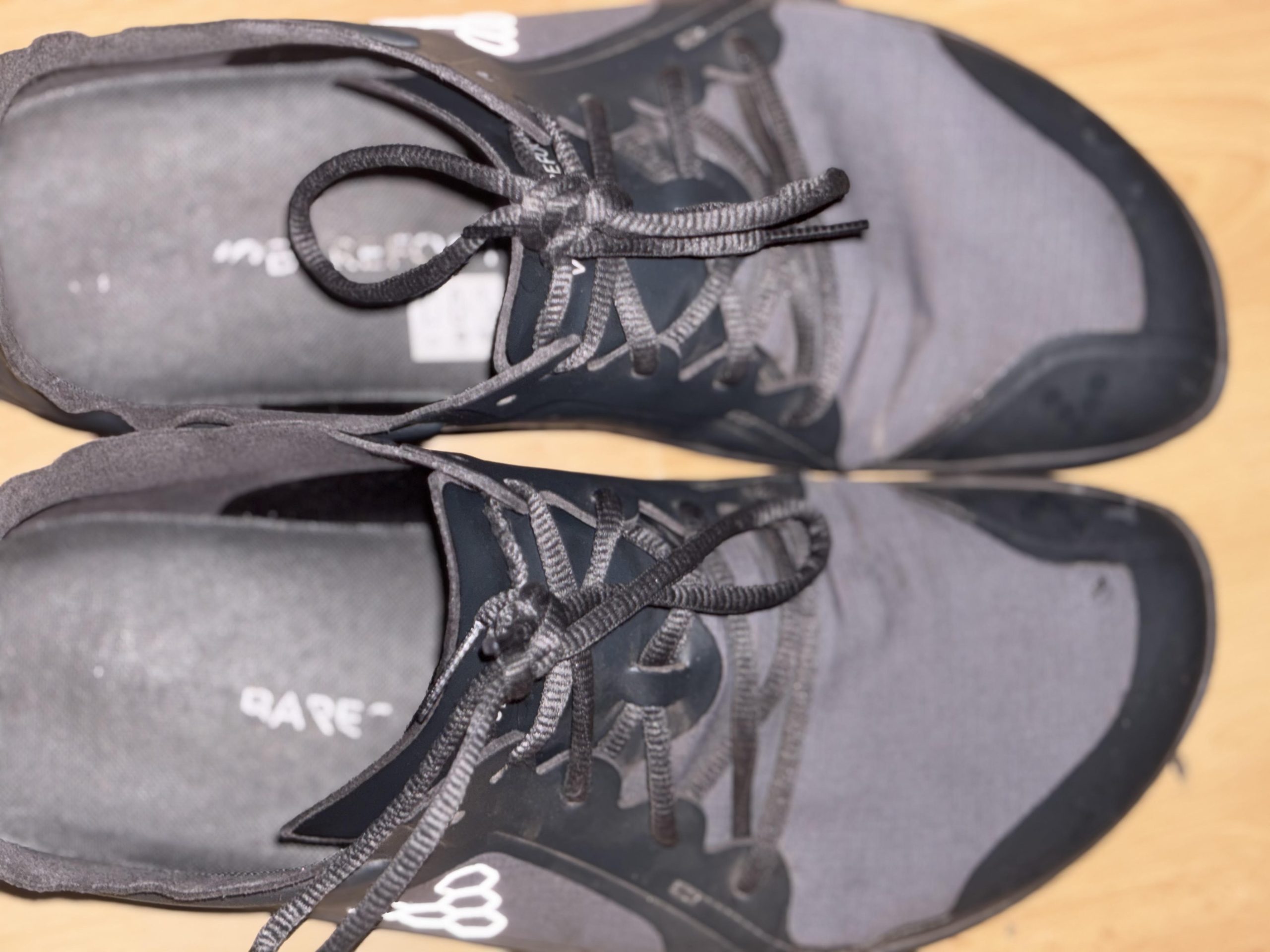
Here’s the honest truth: every single pair eventually rips or develops holes. It’s not one bad batch — it’s consistent. It doesn’t matter how careful I am or what model I buy. The uppers tear, holes appear in the fabric, and they simply don’t hold up over time. My most recent pair seemed promising — the soles felt durable enough — but then I discovered a rip right across the top, on the right foot. It wasn’t from catching it on something sharp or careless wear — it just failed. Plain and simple.
And for £80 a pair? You honestly don’t expect this. That’s not cheap footwear. At that price point, you reasonably expect durability that matches the cost. Instead, it feels like the materials are getting thinner and the build quality is getting weaker — while the price only seems to go one way: up.
When I tried to get it sorted out? That’s where it went from disappointing to ridiculous. I sent a message on Sunday night with photos explaining the issue. By Monday afternoon — nothing. No phone number visible anywhere on their website. The live chat button is buried right at the very bottom of the homepage where almost nobody would ever find it. Instead of someone helping me, I received two separate emails asking me to leave a review — before they’d even acknowledged my problem.
It feels like they want the reputation of being an ethical, customer-focused brand — without putting in the actual work to back it up. If you’re paying £80+ for a pair of trainers, you shouldn’t have to hunt for a way to speak to someone when they fall apart.
Questions & Answers
Q: How long have you been a customer? A: Over 15 years. I wanted them to succeed — that’s why this is so frustrating.
Q: What went wrong? A: The upper material ripped across the top of the right foot. No damage from outside — just the fabric failing. And this has happened with multiple pairs now, not just one.
Q: How much did you pay? A: Around £80. At that price, I expect them to last more than a few months without tearing. That’s not unreasonable, is it?
Q: Have they replied to you yet? A: Only with automated emails asking for a review. No actual human being has addressed my enquiry.
Q: Would you buy from them again? A: I honestly don’t know. I want to love the product — but £80 every few months because they keep ripping isn’t sustainable. And if support is this hard to reach? It’s a hard pass.
It sounds beautiful. It feels warm. It draws people in — people who are looking for something real, something meaningful, something to believe in.But look a little closer. Look at what happens when someone asks a difficult question. When someone speaks up. When someone says: “Wait — this doesn’t feel right.”
That’s when the “love and light” disappears.
The Gap Between What They Say — And What They Do
They talk about unity — yet they isolate and silence anyone who disagrees.
They talk about healing — yet they’ve targeted one person with over 131 separate attacks.
They talk about integrity — yet they send fake lawyer’s letters to intimidate people into silence.
They talk about truth — yet they delete videos, hide comments, and refuse to answer simple questions.
This isn’t spirituality. This is branding. And it’s brilliant marketing — because who’s going to question someone who talks about “love” and “spirituality” all the time? If you do, you’re the one being negative. You’re the one out of alignment. You’re the problem.
When Love Becomes A Product
Here’s what I’ve come to realise: spirituality isn’t their foundation — it’s their packaging.
It’s what makes the courses worth thousands instead of hundreds. It’s what makes people trust them without asking questions. It’s what creates a community that defends them even when the evidence is staring them in the face.
Because if you sell people on the idea that following you is the path to being a “better, more spiritual person,” then criticising you becomes criticising their own growth. That’s not community — that’s a business model.
And it works — until it doesn’t. Because eventually, the truth piles up. Eventually, the fake lawyer letters, the burner accounts, the unanswered emails, and the silenced voices become too loud to ignore.
Real Spirituality Doesn’t Need A Brand
True spirituality doesn’t need to advertise itself as spiritual. It shows up in how you treat people — especially the ones who can’t give you anything.
Real love doesn’t attack people 131 times.
Real compassion doesn’t threaten people with fake legal letters.
Real integrity doesn’t vanish when the cameras are off.
The most painful part of all this isn’t the money or the harassment. It’s seeing how many people genuinely believe in this message — and how that belief is being used against them. They’re buying a version of “spirituality” that vanishes the moment you step out of line.
The Truth Will Always Be Louder
I’m not here to tell anyone what to believe. But I am here to show people what’s actually happening. You don’t get to claim the moral high ground while digging holes for people who disagree with you.If your “spirituality” only extends to people who pay you, agree with you, and never question you — it’s not spirituality. It’s a customer loyalty programme. And I’m not buying it anymore
o understand the full reality behind this organisation before making a financial commitment, read our complete unfiltered analysis across the network:
The Qualifications: Read our comprehensive CHEK Qualifications Review and Unfiltered Truth to see how these certifications hold up in the commercial fitness industry.
The Industry Reality: Learn why unaccredited courses can stall your career in The Hidden Cost of Uncertified Fitness Qualifications: Paul Chek Qualifications
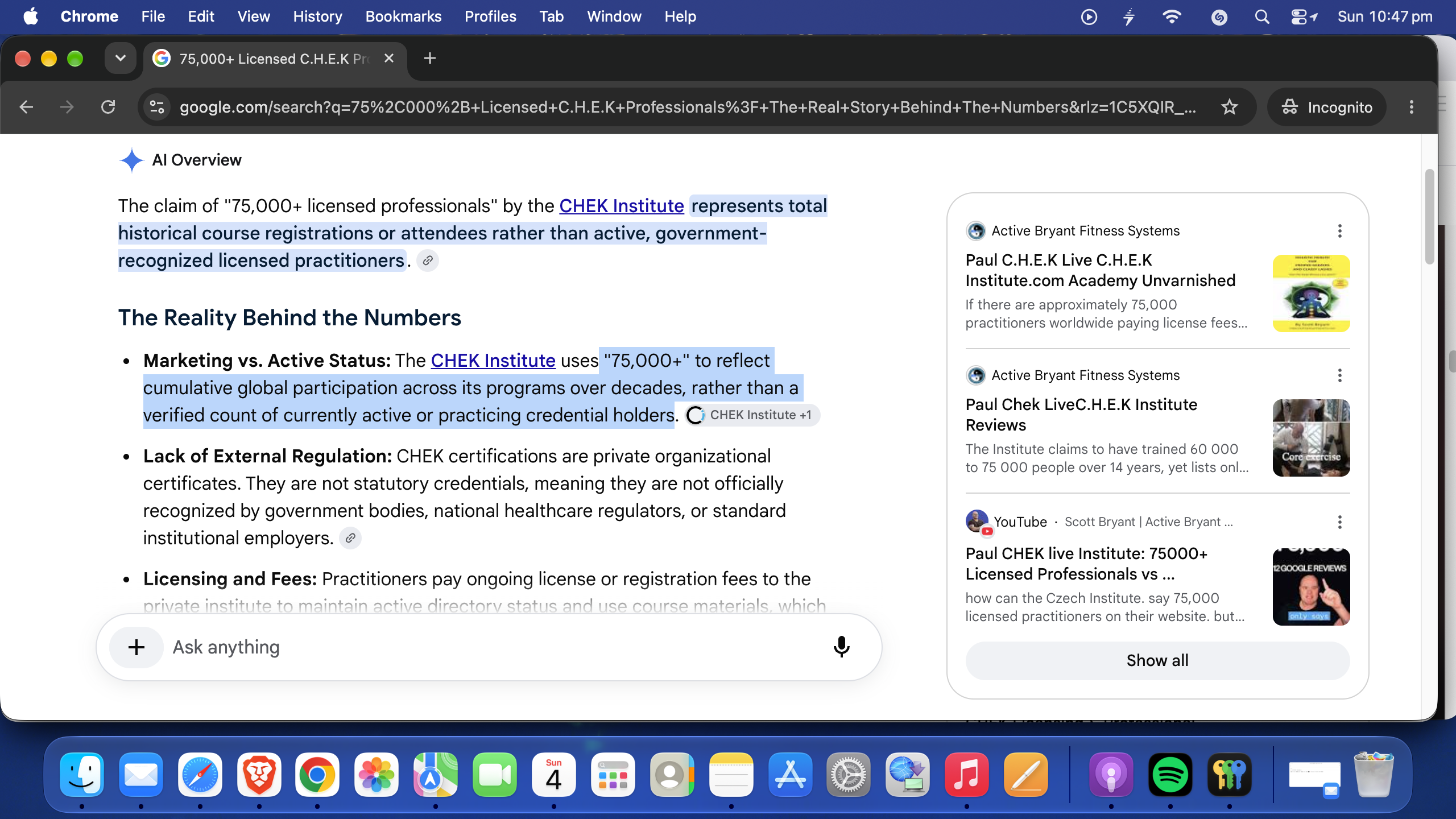
C.H.E.K Institute Admits It: The “75,000 Practitioners” Number Is Not What You Think
They’ve been saying it for years — “75,000 practitioners worldwide.” But what does the fine print actually say?
C.H.E.K Institute Admits It: The “75,000 Practitioners” Number Is Not What You Think
What They Claim “75,000+ practitioners globally trust the C.H.E.K Institute“
What Their Own Website Actually Says “75,000+ reflects cumulative global participation across its programs over decades rather than a verified count of currently active or practicing credential holders.”
In plain English:
• It is NOT 75,000 active practitioners
• It is NOT 75,000 licensed professionals
• It is EVERYONE who has ever taken ANY course, workshop, or program since 1995 — combined
• Most of those people are NOT currently licensed — the license system has only existed for a few years
• Most of those people are NOT practicing — they simply attended a course at some point in 30 years
The Fake Solicitor Letter, SRA Investigation & Full Evidence Chek Europe & C.H.E.K Institute
Fact 2: The Qualifications Are Not Externally Recognised
“C.H.E.K certifications are private organizational certificates. They are not statutory credentials — not officially recognised by government bodies, national healthcare regulators, or standard institutional employers.”
What this means:
• They are private certificates — not government or nationally regulated qualifications
• Employers and regulators do not officially recognise them
• Their value is determined entirely by the Institute itself — not by independent standards
Fact 3: The License System — Pay To Stay Listed
“Practitioners pay ongoing license or registration fees to maintain active directory status and use course materials. Critics argue this conflates basic course completion with elite professional status.”
What this means:
• You pay thousands for the courses
• Then you pay yearly license fees just to stay on their directory
• Without that annual payment — you’re removed
• Critics say this creates a system where maintaining “active status” is about paying fees, not maintaining standards
Fact 4: Industry Scrutiny On The Numbers
“Independent industry watchdogs highlight discrepancies between the massive global numbers claimed in marketing and the actual volume of publicly verifiable active practitioners.”
The bottom line:
75,000 course participants over 30 years ≠ 75,000 active practitioners today.
Yearly license fees to stay listed ≠ independent professional accreditation.
Sources: Direct quotes from C.H.E.K Institute official website + independent industry analysis. Links provided to original source material
o understand the full reality behind this organisation before making a financial commitment, read our complete unfiltered analysis across the network:
The Qualifications: Read our comprehensive CHEK Qualifications Review and Unfiltered Truth to see how these certifications hold up in the commercial fitness industry.
The Industry Reality: Learn why unaccredited courses can stall your career in The Hidden Cost of Uncertified Fitness Qualifications: Paul Chek Qualifications
75,000+ Licensed C.H.E.K Professionals? The Real Story Behind The Numbers
Published: October 4, 2026
The C.H.E.K Institute’s own AI overview claims: “30 years of education and 75,000+ licensed professionals.” But when you look closer, the numbers — and the definitions — don’t add up.
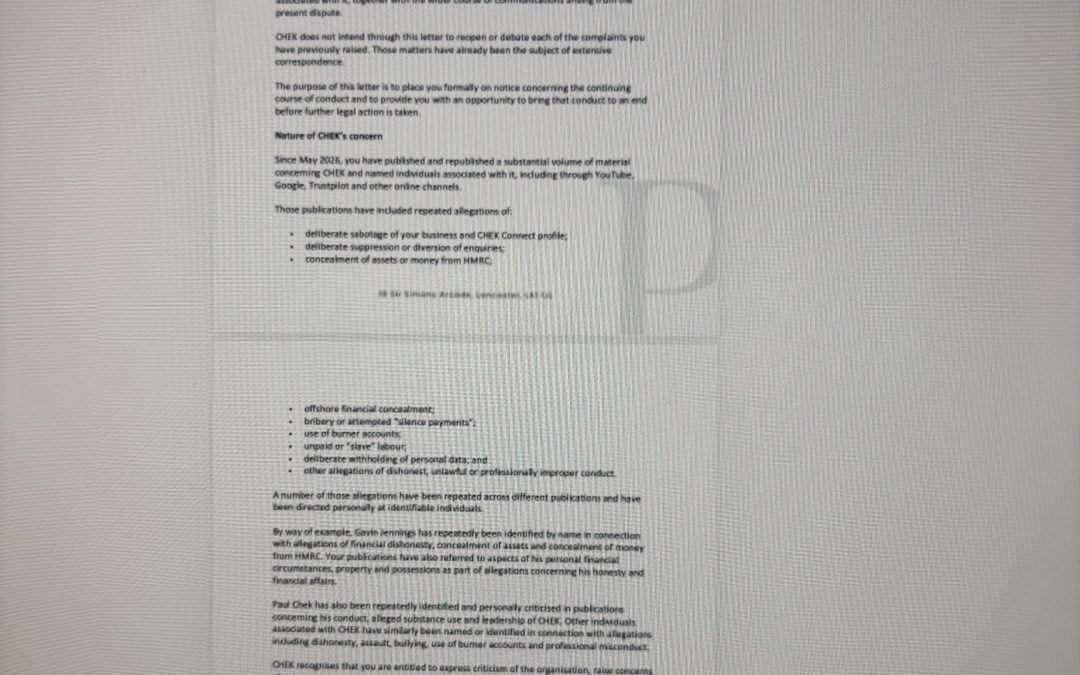
The Fake Solicitor Letter, SRA Investigation & Full Evidence Chek Europe & C.H.E.K Institute
Q: 75,000 Licensed Professionals — What Does That Actually Mean?
Paul Chek has stated publicly that you are NOT considered a C.H.E.K Practitioner until you reach Level 4. So are there really 75,000 Level 4 and Level 5 practitioners worldwide? That seems extraordinarily high — especially when you look at how few you actually see in mainstream fitness, physiotherapy, or clinical settings.
The 75,000 figure likely includes EVERYONE who has taken ANY course — Level 1, short workshops, online modules — not just qualified practitioners. It’s a big number that sounds impressive, but it doesn’t mean what most people think it means.
Q: A Name Change — And Why It Matters
The “Holistic Lifestyle Coaching” course used to be called “Nutrition and Lifestyle Coaching.” It was renamed after they ran into trouble with regulators. If the course content was sound and recognised — why change the name? That’s a question worth asking
Q: C.H.E.K Practitioner — Since 1995, Still Not Recognised
The C.H.E.K Practitioner pathway has existed since 1995. That’s over 30 years. Yet today — it is still not recognised by Ofqual, CIMSPA, or any government or independent professional body. How can something exist for three decades and still not meet basic industry standards?
Q: 15 CPD Credits Per Year — But Who Is Checking?
You must earn 15 CPD points annually to keep your license active. But these points:
• Do NOT count toward any external professional registration
• Can only be earned by paying them for more of their courses
• Cost premium prices with zero transferable value
This isn’t professional development — it’s a closed loop. You pay them, you earn points only they value, and you pay them again next year.
Q: Hands-On Courses — Taught Entirely Online?
The Integrated Movement Science (IMS) courses were originally designed as hands-on, practical training — palpation, assessment, touching and moving clients. Yet now they are offered as fully online, self-paced modules.
How can you learn to assess and correct someone’s movement patterns without ever touching them? Many gym owners and experienced professionals have raised concerns: students are completing “practical” courses online and entering the industry without the hands-on skills they actually need. That’s not just poor training — that’s a safety issue for clients.
Q: Professional Liability Insurance — Hard To Ge
Because of the C.H.E.K approach — including Paul Chek’s public statements about drug use, plant medicine, and alternative therapies — many mainstream insurers are reluctant to provide professional liability cover to C.H.E.K practitioners. Doctors, physios, osteopaths — these professionals are recognised and insured. Why is it so difficult for C.H.E.K practitioners to get the same coverage?
Q: CPR Certificate — Mandatory, But Not The Qualifications?
They require you to hold a current CPR certificate to keep your license. That’s a standard, recognised requirement. Yet the actual qualifications themselves — the ones you paid thousands for — are not recognised by anyone outside their organisation. That’s backwards. The basics are regulated, but the main qualification isn’t.
The Bottom Line
The Bottom Line
For 30 years, the C.H.E.K Institute has built a system that looks impressive on the surface — big numbers, structured pathways, annual requirements. But peel back one layer:
• The big numbers may not mean what they claim
• The “professional standards” are their own private rules
• The CPD points only have value if you keep paying them
• Practical courses are being taught online with no hands-on supervision
• Insurance is hard to come by because their approach sits outside mainstream recognition
And let’s be honest — if there really were 75,000 licensed practitioners worldwide, this system would be everywhere. It would be standard. It would be recognised. Every gym, every clinic, every physiotherapy practice would know who they are. But it isn’t. Because the numbers don’t match reality.
Knowledge should stand on its own merit. It shouldn’t need a closed loop system, inflated numbers, and annual fees just to maintain its value. Ask the questions before you invest.
o understand the full reality behind this organisation before making a financial commitment, read our complete unfiltered analysis across the network:
The Qualifications: Read our comprehensive CHEK Qualifications Review and Unfiltered Truth to see how these certifications hold up in the commercial fitness industry.
The Industry Reality: Learn why unaccredited courses can stall your career in The Hidden Cost of Uncertified Fitness Qualifications: Paul Chek Qualifications
ChekConnect was the official practitioner directory for the C.H.E.K Institute, running since approximately 2005. Marketed as a way for clients to find qualified C.H.E.K practitioners worldwide, it was included as a benefit alongside annual license fees paid by practitioners.
When Did It Go Offline?
As of early September 2026, ChekConnect went offline. As of October 4, 2026 — it has been unavailable for over 30 consecutive days. No official announcement has been made regarding when it will return, or if it will be restored at all.
• 99% receive zero enquiries through the directory
• Profiles were not rotated fairly — certain individuals appeared on the homepage permanently while others were buried on page 2 or deeper
• Links often malfunctioned — clicking certain profiles would redirect back to the homepage
• Practitioners who paid annual license fees were paying for a service that delivered no value
• Thousands of practitioner profiles were removed without notice in a previous update, causing significant SEO ranking drops for the institute’s own website
The Fake Solicitor Letter, SRA Investigation & Full Evidence Chek Europe & C.H.E.K Institute
What Does Consumer Law Say?
Under the Consumer Rights Act 2015, goods and services must be fit for purpose, as described, and of satisfactory quality. If a paid service stops working or fails to deliver what was promised, consumers have the right to request a refund. The time limit for claims in the UK is six years.
Questions That Need Answers
• Why has ChekConnect been offline for over a month with no communication?
• Why were practitioners paying license fees for a service that didn’t generate leads?
• Why was the directory not restored after complaints were raised two years ago?
• If the service is discontinued — will pro-rata refunds be issued to those who paid for it?
What Can You Do?
If you are a current or former C.H.E.K practitioner who paid for access to ChekConnect:
1. Keep records — screenshots of your profile, payment receipts, and any messages sent to support
2. Know your rights — you have six years under the Consumer Rights Act 2015
3. Request a refund — if the service wasn’t fit for purpose, you are entitled to ask for your money back
4. Share your experience — others deserve to know what they’re paying for
“The truth doesn’t need to be complicated. It just needs to be seen.
understand the full reality behind this organisation before making a financial commitment, read our complete unfiltered analysis across the network:
The Qualifications: Read our comprehensive CHEK Qualifications Review and Unfiltered Truth to see how these certifications hold up in the commercial fitness industry.
The Industry Reality: Learn why unaccredited courses can stall your career in The Hidden Cost of Uncertified Fitness Qualifications: Paul Chek Qualifications



 Questions & Answers
 What They Claim