Paul Chek Coach — What They Don’t Tell You Before You Enrol
What Is a Paul Chek Fitness Coach Actually?A Paul Chek Coach is NOT a government-recognised qualification. It is NOT accredited by any national awarding body, university, or mainstream fitness regulatory authority in the UK. It is a PRIVATE CERTIFICATE issued by a private organisation — the C.H.E.K Institute. That means you cannot use it to register as a regulated professional, you cannot bill insurance or medical schemes, you cannot legally perform clinical diagnosis or medical treatment, and you cannot practise under standard professional frameworks. You can call yourself a Chek Coach — privately — and that is all.
“C.H.E.K Institute: What They Don’t Tell You”
What Does It Actually Cost?
HLC Level 1 alone is £747. Then there are upsells, yearly fees, then Level 2, then Level 3. They claim tens of thousands trained globally — but Google, reviews, and directory listings show very few verified public reviews, very few active practitioners, and very little independent evidence. The refund policy is extremely restrictive. You cannot open the materials. You cannot download anything. If you access the content, often there is no refund at all. They say 14 days — but with conditions that make it almost impossible to claim. Equipment and course kits can take three to six months to arrive with no clear accountability.
Claims vs Reality
They claim over 200 hours of coaching per week — but there are only 168 hours in an entire week. That claim alone is mathematically impossible. They claim the business was built from scratch — but infrastructure, student pipelines, and European networks were inherited from predecessors, not built alone. They claim fair directory listings — but Chek Connect prioritises institute favourites and leadership, while senior experienced practitioners are buried or hidden. They claim global reach — but independent compliance analysis shows a massive gap between claimed numbers and verifiable reality.
What They Don’t Tell You Upfront
There are yearly membership fees just to stay listed. There are endless upsells for books, courses, tools, and events — all extra. Chek Connect directory: independent analysis shows around 99% of practitioners get zero client enquiries from it. The website has no confirmed disabled access. Past financial and bankruptcy history is not disclosed publicly on marketing materials.
Questions & Answers
Q: Is a Paul Chek Coach qualification recognised in the UK? A: No. It is a private certificate only. It is not recognised by any government body, CIMSPA, REPs, or any mainstream fitness awarding organisation.
Q: Can I get insurance and work as a professional with it? A: Not through standard professional channels. Because it is not an officially recognised qualification, you cannot register with mainstream regulatory bodies or use it for clinical or insurance purposes.
Q: How long does it take and how much does it really cost? A: HLC Level 1 is £747 and can take up to three years to complete fully. Then there are yearly fees, higher levels, and additional costs. Most recognised qualifications cost less, take months not years, and let you start earning much sooner.
Q: Can I get a refund if I change my mind? A: The refund policy is very strict. You generally cannot open or access the materials at all if you want a refund. If you download or view anything, you may be refused a refund entirely.
Q: Do I get clients or work through Chek Connect? A: Independent analysis shows the vast majority of practitioners receive no client enquiries through the directory. You are responsible for building your own business and finding your own clients.
What Should You Do Instead?
Read Paul Chek’s own books first — they are excellent and cost far less than the courses. Compare with recognised qualifications such as CIMSPA, REPs, Active IQ, or YMCA Awards. Those are recognised worldwide, cost less, take months not years, and let you start working professionally much sooner. Research every claim — verify student numbers, verify accreditation status, verify refund policies, and verify actual success rates from independent sources. Ask yourself one simple question: If this qualification is so valuable, why is it not recognised by any government or mainstream industry body anywhere?
The Bottom Line
I am a Master Level 5 Chek Practitioner. I have done the courses, paid the money, climbed the levels, and built the business. I am number one on Google for the very terms they compete for. And I am telling you the truth — do your homework before you hand over your money. Paul Chek Coach sounds impressive. But look behind the marketing. Look at the facts. Look at what you CANNOT do with it. Look at what it actually costs. And decide for yourself — is it really worth it? Or is it just a very expensive private certificate that gives you no official standing, no insurance, no referrals, and no guarantee of ever earning a penny?
THE LARGEST C.H.E.K CLINIC IN THE WORLD? THE TRUTH
THE CLAIM
Gavin Jenkinsstates publicly that he built one of the largest C.H.E.K based clinics in the world. He claims he began mentoring C.H.E.K students and personally delivered over 200+ hours a week of coaching. He presents himself as the founder, the builder, and the one who created everything from scratch.
THE MATHS DOES NOT ADD UP
One week equals 168 hours in total. 200 hours of work means more time than actually exists — even if someone worked every single hour of every single day without sleep, without eating, without a single break. It is mathematically impossible. He never mentions any team. He never says “my team and I.” He claims he did it all himself. If his most basic claim — the hours — is physically impossible, what else about his story has been exaggerated?
WHO ACTUALLY BUILT C.H.E.K EUROPE?
The business known as C.H.E.K Europe was not built by Gavin Jenkins. It was established, built up, and run by Alex Mackenzie for years before he took over around 2012. She built the client base, the practitioner network, the reputation, and the infrastructure. Gavin Jenkins stepped into a fully formed, ready-made business — built by someone else — and then presented it to the world as if he had built it himself. He took over her work, took her client list, took her practitioner contacts, took her reputation — and claimed it all as his own achievement.
THE CLINIC IN LANCASHIRE
Gavin Jenkins did set up a physical therapy room facility in Lancashire. It is true that the facility exists. It is a nice space with treatment rooms. But building a facility with rooms is not the same thing as building the business, the network, the reputation, and the practitioner infrastructure. He inherited the network from Alex Mackenzie. He built the rooms — but he did not build the business.
STAFF UNPAID, UNDERPAID, AND WORKING FOR FREE
Multiple accounts and firsthand reports tell a very different story behind the clinic walls. Staff were reportedly not paid properly. People came and went regularly because the working conditions and treatment were unacceptable. Practitioners working under him were paid roughly half of what he charged clients — keeping the large majority for himself while those delivering the service received barely above minimum wage.
Many practitioners, including myself, were asked to work entirely for free — mentoring students, delivering sessions, building the brand — on the promise of course access or future opportunity. Months of work. Thousands of pounds worth of mentoring. And the reward? A book at Christmas. A pen. Once — a fleece jacket with the logo. That was the payment for building his business for nothing.
THE SIX MONTHS CLAIM
He claims he built his client base in under six months. He lives in a rural, remote part of Lancashire — 20 to 40 minutes away from any major population centre. He also told students personally that his previous building business had gone bankrupt. So he claims he built a full-time, thriving clinic from scratch in six months — in a remote location — while carrying a history of bankruptcy? That does not add up. He took over an existing business — and then lied about how it got there.
WHERE IS THE PROOF?
If this was truly one of the largest C.H.E.K clinics in the world — where are the thousands of success stories? Where are the photos? Where are the tours? Where are the reviews? The entire Institute platform shows only around 706 reviews across everything. Google shows just 12 reviews. If a clinic of that size truly operated and served thousands of people — where is the evidence? Where are the clients? Where are the results?
SUMMARY
Alex Mackenzie built C.H.E.K Europe. Gavin Jenkins took it over in 2012. He built therapy rooms in Lancashire — that part is real. But he did not build the business, the network, or the reputation. He inherited them. He claims 200 hours a week — impossible. He claims he built it from scratch — untrue. He claims world-leading scale — with no reviews, no photos, no proof. Staff unpaid. Practitioners used for free. Creditors left unpaid. Bankruptcy history hidden. When you ask the simple questions — the answers do not exist
To understand the full reality behind this organisation before making a financial commitment, read our complete unfiltered analysis across the network:
The Qualifications: Read our comprehensive CHEK Qualifications Review and Unfiltered Truth to see how these certifications hold up in the commercial fitness industry.
The Industry Reality: Learn why unaccredited courses can stall your career in The Hidden Cost of Uncertified Fitness Qualifications: Paul Chek Qualifications
lying about costs, lying about exposure, lying about hours, lying about business growth, lying about who built what, exploiting staff for free labour, breaking consumer law, charging you 20 times the real price for basic tools — and then deliberately pushing you off the site while he puts himself front and centre.
This is the real Gavin Jenning — not the version he wants you to seeKeywords: Gavin Jenning, Gavin Jenning C.H.E.K Institute, Gavin Jenning bankruptcy, Gavin Jenning lies, £50k excuse for conventions, estimated £32 million valuation, £29,000 declared assets, worked for free no pay, £14 christmas gift, asked to fix website for free, sabotaged hidden on Chek Connect, conflict of interest homepage, Level 5 Master Practitioner excluded, C.H.E.K Institute overpriced equipment, C.H.E.K Institute illegal refunds, C.H.E.K Institute exploitation, C.H.E.K Institute scam, C.H.E.K Institute refund policy illegal, C.H.E.K Institute calliper £395, alternative calliper £20 same function, C.H.E.K Institute uncovered, Gavin Jenning C.H.E.K Europe
C.H.E.K HLC Holistic Lifestyle Coaching Level 1 — The Truth They Don’t Tell You
C.H.E.K HLC Level 1 — Holistic Lifestyle Coaching. Listed price: $747 USD (back in 2005 it was £500 — prices keep rising). On the surface it looks straightforward. Three days of training. Learn lifestyle coaching. Get qualified. But read the fine print — and what students are actually being told NOW — and the picture changes COMPLETELY.
C.H.E.K Holistic Lifestyle Coach
The 14-Day Money-Back Guarantee — Or Is It?
They proudly display a “100% Satisfaction — No Risk Guarantee.” It sounds amazing. “14-day full refund.” But look at the ACTUAL terms hidden underneath: To qualify for a refund: Watch NO MORE THAN 1 HOUR of the content. Do NOT download ANY materials. Contact them within 14 days. Think about that. You pay your money. You get access. You want to SEE if it’s any good. But if you watch MORE THAN ONE HOUR? Or download ANYTHING to watch offline? YOU GET ZERO REFUND. How can you decide if a course is worth hundreds of dollars after watching JUST ONE HOUR? And if you can’t download anything? How are you supposed to review it properly? The “No Risk Guarantee” is actually “No Refund Unless You Barely Touched It.” That is NOT a 14-day money-back guarantee. That is a trap.
HLC Holistic Lifestyle Coaching Level 1
“No Extra Purchases Needed” — REALLY?
The website CLEARLY states: “No extra purchase is needed. Core training and prerequisites included.” BUT — here’s what they’re NOT telling you: To progress through the levels, you are NOW being told you MUST complete ADDITIONAL separate courses: Infant Development, Spinal Structures & Function, The C.H.E.K Approach to the Lower Limbs, plus matching IMS levels at EVERY stage. NONE of these are included in the HLC price. They are SEPARATE courses. SEPARATE costs. SEPARATE time. So when they say “no extra purchases needed” — it is NOT true. You CANNOT become a qualified practitioner with ONLY the HLC levels. You ARE being forced to buy MORE courses. That is NOT what was promised.
The Timeline — 3 YEARS Just to Reach Level 3
Read this directly from their own website: “On average budget roughly ONE YEAR per level. If your goal is to qualify for HLC Level 3 — plan for APPROXIMATELY THREE YEARS in total.” THREE YEARS. Three levels. One year each. And that’s BEFORE you add the mandatory extra courses, the IMS levels, the prerequisites, travel, accommodation, and time off work. By the time you reach Level 3? You’re looking at thousands MORE — and THREE YEARS of your life.
HLC Holistic Lifestyle Coaching Level 2
RECOGNISED NOWHERE — Validated ONLY By THEMSELVES
Here is the HARDEST TRUTH they NEVER tell you UPFRONT: This qualification is NOT recognised by ANY official government body, industry accreditation board, or insurance provider worldwide. It is a PRIVATE COMPANY certificate. Valid ONLY within THEIR own system. That means: NO official body will accept it. NO professional register will list you based on it. They will NOT refer clients to you — C.H.E.K Connect barely works for 99% of practitioners. You STILL have to find YOUR OWN clients — YOURSELF — just like before. You CANNOT use it to work in clinics, gyms, or alongside other recognised professionals.
The £60 Annual License — For Paper Worth Nothing
Once you qualify? It doesn’t end there. They charge you an ANNUAL LICENSE FEE — around £60 EVERY SINGLE YEAR — just so you can say you’re “Certified.” Think about that: You paid thousands for the courses. You spent THREE YEARS studying. NOW you pay THEM £60 EVERY YEAR — just to keep the title. And that piece of paper? Still recognised NOWHERE outside their own website. You are paying a yearly subscription for a qualification that has NO official value.
INSURANCE — You STILL Need Private Cover
Because it is NOT an officially recognised qualification: You CANNOT get standard professional insurance through mainstream providers. You MUST seek SPECIALIST private insurance — often MORE expensive. The qualification itself does NOT entitle you to ANY professional protection. You carry ALL the risk — while they collect the fees.
The Alternative — Get Started THIS YEAR, Not In Three Years
Here is what EVERYONE should know BEFORE they commit: You do NOT need to spend THREE YEARS and THOUSANDS of pounds just to start helping people. There are recognised, government-backed, nationally accredited nutritional courses available for just over £1,000 TOTAL — where you get: FULL official recognition. INSURANCE included or easily available through mainstream providers. Start coaching and earning WEEKS or MONTHS later — NOT YEARS. NO hidden prerequisites. NO mandatory extra courses. NO annual license fees. Then — WHEN YOU ARE READY — you can do a separate Strength & Conditioning course LATER, as and when YOU choose. The nutritional qualification alone will NOT take THREE YEARS. You can be qualified, insured, and working in a fraction of the time — for a fraction of the cost. And it will be RECOGNISED EVERYWHERE. Not just on one private website.
Can You Actually Work After Level 1?
They say: “Yes — you can start seeing clients as soon as you complete Level 1.” BUT they ALSO say: “You are NOT qualified to diagnose, treat medical conditions, or claim clinical expertise.” So what CAN you actually do? Lifestyle coaching. That’s it. You CANNOT tell someone what is WRONG with them. You CANNOT diagnose. You CANNOT claim to fix injuries. So you pay hundreds of dollars, spend three days training… and your hands are tied.
Parallel Paths — BOTH HLC AND IMS Required
Here’s the BIGGEST hidden cost: HLC and IMS run in PARALLEL. You cannot do JUST HLC. You cannot do JUST IMS. Level 1 = HLC 1 + IMS 1. Level 2 = HLC 2 + IMS 2 + extra courses. Level 3 = HLC 3 + IMS 3 + MORE extra courses. EVERY milestone requires BOTH courses. DOUBLE the cost. DOUBLE the study. DOUBLE the time. But they don’t tell you that clearly UPFRONT.
Summary — What They Should Have Told You Upfront
HLC Level 1: $747 USD — 3 days training. Refund: ONLY if you watch <1 hour and download NOTHING. “No extra purchases”: FALSE — mandatory separate courses required. Timeline: 3 YEARS minimum to reach Level 3. Cost: £3,000+ for HLC alone — THOUSANDS more for mandatory extras. RECOGNISED NOWHERE — private company certificate only. £60/year license fee — forever. No client referrals — C.H.E.K Connect barely works. Private insurance ONLY — mainstream providers won’t accept it. Can’t diagnose, can’t treat — limited scope of practice. Requirements keep CHANGING after you’ve paid. ALTERNATIVE: Nationally recognised nutrition qualification for ~£1,000 — insured, accredited, working MONTHS not years. Add strength training LATER.
The Bottom Line
Before you spend your money, your time, and THREE YEARS of your life — READ THE FINE PRINT. The refund guarantee is a trap. The “no extra purchases” is misleading. The timeline and hidden costs? They bury them where you won’t see them until you’ve already paid. And the HARSH REALITY? You are paying thousands, studying years, and paying a yearly fee… for a qualification recognised ONLY by THEM. No official body. No insurance recognition. No career leverage. You do NOT need to commit three years of your life and thousands of pounds just to start helping people. There IS another way. Get qualified. Get insured. Get OFFICIALLY recognised. Start working. Build from there. On YOUR terms — not theirs. Ask questions. Demand FULL transparency. And remember: if they hide the accreditation status, hide the yearly fees, and hide the TRUE value of what you’re buying? That tells you EVERYTHING you need to know CHEK Holistic Lifestyle Coach
To understand the full reality behind this organisation before making a financial commitment, read our complete unfiltered analysis across the network:
The Qualifications: Read our comprehensive CHEK Qualifications Review and Unfiltered Truth to see how these certifications hold up in the commercial fitness industry.
The Industry Reality: Learn why unaccredited courses can stall your career in The Hidden Cost of Uncertified Fitness Qualifications: Paul Chek Qualifications
lying about costs, lying about exposure, lying about hours, lying about business growth, lying about who built what, exploiting staff for free labour, breaking consumer law, charging you 20 times the real price for basic tools — and then deliberately pushing you off the site while he puts himself front and centre.
This is the real Gavin Jenning — not the version he wants you to seeKeywords: Gavin Jenning, Gavin Jenning C.H.E.K Institute, Gavin Jenning bankruptcy, Gavin Jenning lies, £50k excuse for conventions, estimated £32 million valuation, £29,000 declared assets, worked for free no pay, £14 christmas gift, asked to fix website for free, sabotaged hidden on Chek Connect, conflict of interest homepage, Level 5 Master Practitioner excluded, C.H.E.K Institute overpriced equipment, C.H.E.K Institute illegal refunds, C.H.E.K Institute exploitation, C.H.E.K Institute scam, C.H.E.K Institute refund policy illegal, C.H.E.K Institute calliper £395, alternative calliper £20 same function, C.H.E.K Institute uncovered, Gavin Jenning C.H.E.K Europe
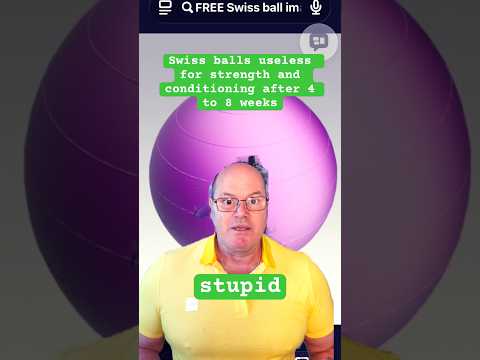
Paul Chek Swiss Ball — What You Need To Know Before You Train
The Swiss ball — also known as the exercise ball or stability ball — has long been a staple in Paul Chek’s approach to core strength, posture, and corrective exercise. Used properly, it builds deep stability, improves balance, and supports spinal health. But if you’re researching Paul Chek, his methods, or his courses, there’s important information you should know BEFORE you invest your time and money.
Paul Chek has long taught that true strength begins with stability. The Swiss ball challenges balance, engages deep core muscles, and helps reveal weaknesses in posture and movement patterns. It’s a simple, affordable tool — yet used correctly, it can transform how your body functions.
Paul Chek Swiss Ball over the park press ups
But What About The Rest Of The Picture?
If you’re searching for Paul Chek and his methods, you’re likely serious about health, integrity, and results. You may also be wondering why so many former practitioners and students are asking questions — about transparency, about information being withheld, and about what happens when you ask for basic records that should be freely available.
Questions Being Asked
Many people are now asking:
• Why is basic information being legally requested and NOT being released?
• Why do former Level 5 practitioners — the highest qualified — feel compelled to speak out publicly?
• Why do students report being asked for 3–6 months’ payment UPFRONT, when businesses in good standing do not need to do this?
Golfer on Swiss ball for Golf performance
Do Your Own Research
The Swiss ball teaches us something important: balance comes from stability, transparency, and truth. If one side of the story is hidden, the picture is never complete. Before you commit your money, your time, and your trust — look at ALL the information available. Search beyond the official website. See what former qualified practitioners are saying. Ask yourself: if everything is as it should be, why are so many questions being met with silence?
Summary
A Swiss ball reveals your true balance — you cannot hide weakness on an unstable surface. The same applies to any organisation. Look, listen, and decide for yourself
To understand the full reality behind this organisation before making a financial commitment, read our complete unfiltered analysis across the network:
The Qualifications: Read our comprehensive CHEK Qualifications Review and Unfiltered Truth to see how these certifications hold up in the commercial fitness industry.
The Industry Reality: Learn why unaccredited courses can stall your career in The Hidden Cost of Uncertified Fitness Qualifications: Paul Chek Qualifications
lying about costs, lying about exposure, lying about hours, lying about business growth, lying about who built what, exploiting staff for free labour, breaking consumer law, charging you 20 times the real price for basic tools — and then deliberately pushing you off the site while he puts himself front and centre.
This is the real Gavin Jenning — not the version he wants you to seeKeywords: Gavin Jenning, Gavin Jenning C.H.E.K Institute, Gavin Jenning bankruptcy, Gavin Jenning lies, £50k excuse for conventions, estimated £32 million valuation, £29,000 declared assets, worked for free no pay, £14 christmas gift, asked to fix website for free, sabotaged hidden on Chek Connect, conflict of interest homepage, Level 5 Master Practitioner excluded, C.H.E.K Institute overpriced equipment, C.H.E.K Institute illegal refunds, C.H.E.K Institute exploitation, C.H.E.K Institute scam, C.H.E.K Institute refund policy illegal, C.H.E.K Institute caliper £395, alternative caliper £20 same function, C.H.E.K Institute uncovered, Gavin Jenning C.H.E.K Europ
Best Personal Trainer — What Actually Makes Someone The Best?
Searching for the best personal trainer?
You are not alone. Thousands of people look every month, but most have no way of knowing who is actually qualified, who is truly experienced, and who is just using clever marketing. The truth is simple: being the best personal trainer is not about having the fanciest website, running paid ads, or making bold claims. It comes down to three things — proven experience, recognised qualifications, and a track record of real results.
Any personal trainer can say they are the best.
Very few can prove it with twenty-seven years of continuous practice, thousands of client sessions, and internationally recognised qualifications including Master C.H.E.K Practitioner Level 5 and YMCA certification. Real expertise takes decades to build. It cannot be bought, copied, or rushed.
When choosing a personal trainer,
look beyond the headline claims. Ask how long they have been in practice. Ask what formal qualifications they hold. Ask if they have experience working with your specific goals — whether that is strength training, weight loss, back pain rehabilitation, sports performance, or holistic wellness. A truly great personal trainer listens first, adapts to you, and builds a programme around your life, not a one-size-fits-all routine.
Many people are drawn to the lowest price
or the most polished adverts. But you always get what you pay for. An experienced expert may charge more, but they save you years of wasted time, incorrect advice, and money spent on methods that do not work. That is the difference between a trainer and an expert.
If you are looking for the best personal trainer
in London and want proven expertise, real results, and honest advice without the gimmicks, I am here. Book your fifteen-minute case triage call today and let us discuss what you actually need. No free trials, no pressure, just twenty-seven years of experience working for you.
CHEK Courses: What They Don’t Tell You Before You Enrol
Are you considering CHEK courses or the IMS 1 programme? You are not alone. Thousands of people search every month looking for honest information about what you actually get, what it really costs, and whether the qualification will be recognised anywhere outside their own system. Here is the full truth — exactly what you need to know before you hand over your money.
CHEK courses are sold as premium,
elite training. They use words like “certified“, “accredited”, and “recognised” — but the fine print tells a very different story. The qualification is internal only. That means it is recognised only by the C.H.E.K Institute itself. It holds no university accreditation. It carries no national government recognition. It will not transfer to any other college, gym, or standard qualification provider. You are paying thousands for a certificate that only matters inside their own world.
The cost is another area they do not make clear up front.
IMS 1 alone is listed at roughly $2,835 USD for a five-day course — before conversion to pounds, before travel, before accommodation, before books and materials. On top of that there are yearly licensing fees you must pay just to keep calling yourself certified. Fail to pay? You lose your qualification. Fail to renew? You cannot use the title. They sell it as a qualification you earn —but it is actually a subscription you rent forever.
Refund rules are shockingly strict.
Their own terms state you can get a refund only if you have completed less than 10% of the course and within 14 days — and you may not have downloaded or viewed any course materials at all. That means once you have watched even one lesson or read one document, you are likely trapped with no way to get your money back. That is not consumer protection — that is locking you in before you know what you are actually buying.
Then there is the claim of $400 per hour coaching rates.
They show these numbers to make you believe you will earn that kind of money once qualified. The truth? Most CHEK practitioners charge standard rates similar to any other qualified trainer. The £400/$400 figure is used to impress people on their website — but it does not reflect what the vast majority of graduates actually earn. It is a marketing number, not a realistic income promise.
Many students tell me the teachers themselves hold no university teaching
qualifications. They are certified through the CHEK system teaching the CHEK system. That is not independent education — that is internal promotion. You are paying premium prices to be taught by people who have no external accreditation to validate their knowledge.
Compare this to government recognised qualifications — Level 2, Level 3, Level 4
Personal Trainer and Nutrition. Those are recognised everywhere. They transfer. They do not expire. No one can take them away from you. CHEK courses? They exist only as long as the Institute says so. They change the rules, raise the fees, or alter the structure — and your qualification value shifts with it.
So should you enrol? If you already hold solid recognised qualifications
and want specialised additional training — proceed with eyes wide open. But if you are new to the industry and thinking CHEK IMS 1 will give you a career recognised by employers, insurers, or gyms? Please understand exactly what you are buying. It is a proprietary system, not a widely accepted qualification. It costs thousands plus yearly fees. It comes with strict refund rules and no independent accreditation.
Get the recognised qualifications first.
Build your career on something solid. Then add specialised training from a position of strength — not as your foundation. That is the honest advice I wish someone had given me years ago. Save your money. Protect your future. And always ask: is this qualification recognised anywhere else besides them? If the answer is no — think very carefully before you pay.
Frequently Asked Questions
Q: Is CHEK IMS 1 recognised by universities or the government? A: No. CHEK IMS 1 is an internal proprietary qualification. It holds no university accreditation, no national government recognition, and will not transfer to standard industry bodies, colleges, or most employers.
Q: How much does CHEK IMS 1 actually cost? A: IMS 1 is listed at roughly $2,835 USD for a five-day course. This does not include travel, accommodation, books, or materials. On top of this you must pay yearly licensing fees just to keep using your qualification title.
Q: Can I get a refund if I change my mind? A: Their terms state refunds are only available within 14 days and if you have completed less than 10% of the course. You also may not have downloaded or viewed any course materials. Once you have seen any lesson or document, you are very unlikely to receive any refund.
Q: Do CHEK practitioners really earn $400 an hour? A: The $400 per hour figure appears prominently in Google search results and listings, but it does not reflect what the vast majority of graduates actually charge or earn. Most work at standard industry rates. It is a marketing figure used in search results, not a realistic average income.
Q: Do I have to pay every year to keep my qualification? A: Yes. There are ongoing annual licensing fees. If you do not pay or renew, you lose the right to call yourself a CHEK certified practitioner. You are effectively renting the qualification rather than owning it.
Q: Are CHEK teachers and instructors fully qualified? A: Most instructors are certified internally through the CHEK system. Many hold no external university teaching qualifications or independent accreditation to validate their teaching standards.
Q: Is CHEK recognised by gyms and insurance companies? A: Generally no. Most mainstream gyms, insurers, and employers require nationally recognised qualifications such as Level 2, Level 3 or Level 4. CHEK is a specialised independent system that is not widely accepted outside its own network.
Q: Can I use CHEK qualifications abroad? A: Because there is no external accreditation, CHEK qualifications are not officially recognised internationally. Government recognised qualifications transfer anywhere. CHEK qualifications do not.
Keywords: CHEK courses, CHEK online courses, CHEK Academy courses, CHEK course cost, CHEK IMS 1 price, CHEK qualification review, CHEK accreditation, CHEK refund policy, CHEK yearly fees, CHEK $400 an hour, CHEK Google search results, CHEK worth it, CHEK before you enrol